EN
The decision to build or upgrade a corn alcohol plant ultimately hinges on selecting a technology provider that understands profitability lives in the margins beyond ethanol yield. While many contractors can deliver distillation columns and fermentation tanks, the real difference emerges from how well the plant’s energy flows are integrated and whether the DDGS, CO2, and biogas streams become revenue centers instead of disposal costs. A corn alcohol technology partner must be evaluated on its ability to design a closed loop system, not just install equipment. Drawing on decades of agro industrial engineering experience, this article outlines the key factors that separate cost competitive plants from those that merely meet specification.
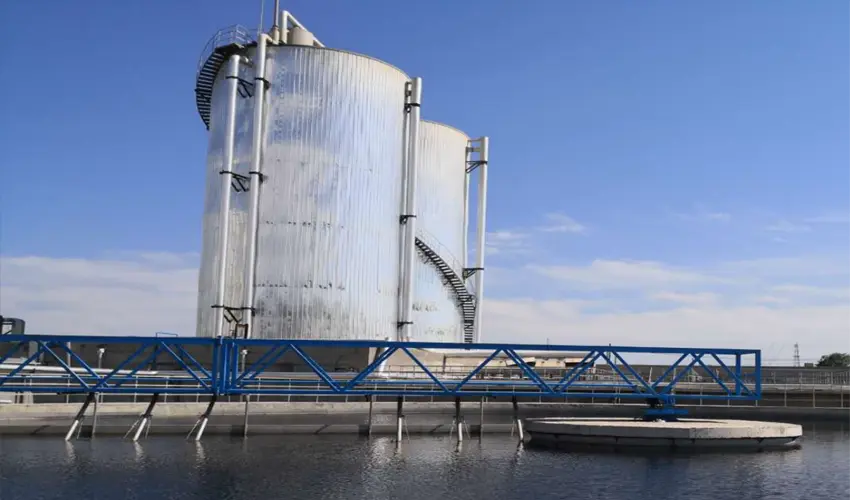
An end to end corn alcohol technology provider takes responsibility for the complete project lifecycle, from feasibility study and process design through equipment manufacturing, installation, commissioning, and ongoing technical service. The scope extends far beyond a purchase order for fermenters and distillation units. It includes raw material handling systems such as grain receiving, cleaning, and storage, precision milling and mash preparation, starch liquefaction and saccharification with optimized enzyme dosing, continuous fermentation with yeast management, multi column distillation with integrated heat recovery, molecular sieve dehydration for anhydrous ethanol, and comprehensive by product handling for DDGS, CO2 recovery, and biogas generation.
This integration eliminates the coordination gaps that plague multi vendor projects. When a single engineering team designs the entire material and energy balance, the plant is far more likely to achieve its design throughput and efficiency targets. The technology provider’s engineering group needs experience across all unit operations: corn purification equipment like rotary screens and magnetic separators, jet cookers, liquefaction and saccharification vessels, fermentation tanks, and the distillation and dehydration systems that produce fuel grade, industrial, or beverage ethanol.
In an engineering, procurement, and construction model, the technology provider manages every phase. The detailed engineering covers piping, electrical, automation, and civil works. Equipment procurement follows the process design exactly, reducing the risk of mismatched capacities. Installation is supervised by process engineers who know the design intent, and commissioning includes thorough performance testing against guarantees. After handover, reliable after sales service and spare parts supply keep the plant running.
Our alcohol solution applies this full scope approach, integrating grain handling, starch conversion, fermentation, distillation, dehydration, and by product processing into a seamless production line. By keeping the entire project under one technical authority, the plant owner gains a single point of accountability.
When the process engineer designing the distillation column also sizes the waste heat recovery system, energy flows are optimized from the start. In contrast, plants assembled from separately sourced equipment often miss these interdependencies. The result is higher operating cost and lower reliability. A technology provider that delivers a turnkey package with a unified process guarantee removes that risk.
Ethanol production plants are energy intensive, with distillation alone consuming over half the total steam. Without deliberate integration of heat streams, a plant operates far below its economic potential. The same logic applies to by products. A forward looking provider designs the facility as a closed loop system, where thermal energy cascades through the process and every residual stream finds a market.
The principle is straightforward: heat that leaves one process step should, wherever possible, preheat another. Vapor from the rectification column can heat the incoming mash. Condensate from evaporators can preheat boiler feed water. Using a pinch analysis, the engineering team identifies temperature levels and available heat loads, then matches them with cold streams such as feedwater, mash preheating, and air for grain drying. In plants we have assessed, integrating these heat recovery loops reduces steam consumption by 20 to 25 percent compared to a non integrated base case.
A well designed waste heat recovery network captures heat from multiple streams: thin stillage evaporation, distillation overhead vapors, and dryer exhaust. The result is a significant drop in boiler fuel use, directly improving the plant’s net energy ratio and cutting greenhouse gas emissions.
The liquid fraction of stillage has high organic content. Anaerobic digestion converts this into biogas, a renewable fuel that can supply up to 15 percent of a plant’s total energy needs. When combined with waste heat recovery, the integrated plant can approach near self sufficiency in thermal energy. AGRIFAM’s alcohol solution includes biogas comprehensive utilization, turning a treatment cost into an energy asset.
Mid project, if your plant will handle multiple grain types or variable feedstock quality, the process design must account for flexible pretreatment and enzyme selection. Our engineering team can run a site specific energy balance, reach us at bjhn@agrifamgroup.com.
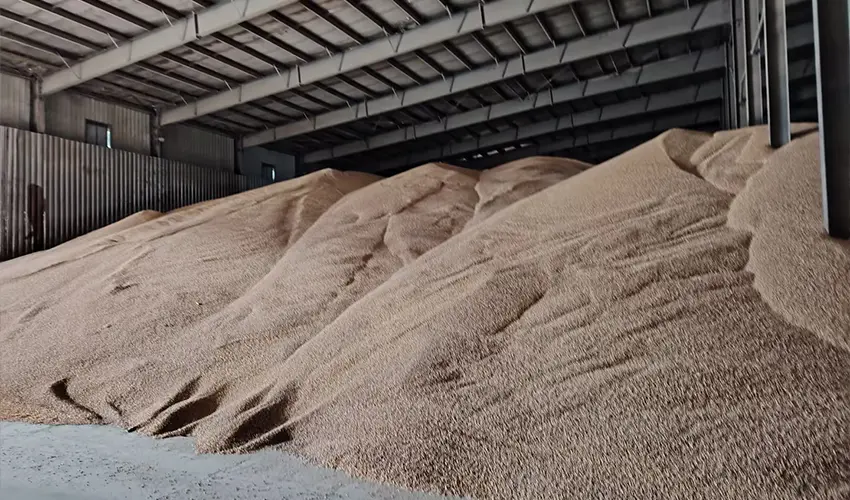
Corn ethanol production yields more than anhydrous alcohol. For every bushel of corn, roughly one third is recovered as distillers grains, and fermentation releases nearly as much CO2 by weight as ethanol produced. Distillers dried grains with solubles find strong demand in livestock feed markets, often competing with soybean meal and corn. In some regions, DDGS sales may contribute 10 to 15 percent of the plant’s gross revenue. Food grade liquid CO2, purified to beverage or industrial specifications, adds another high margin stream.
| Co-Product | Market Application | Typical Revenue Share |
|---|---|---|
| DDGS | Livestock feed | 8–15% of corn cost |
| Liquid CO2 (food grade) | Beverage, food processing | 3–5% of plant revenue |
| Biogas | Boiler fuel, power generation | Saves 10–15% of energy cost |
Fermentation CO2 can be scrubbed, compressed, and liquefied for sale to carbonated beverage producers, food processors, or industrial gas suppliers. The capital cost of a CO2 recovery unit is often recovered within two to three years from gas sales. Combined with waste heat integration, this closed loop model is what defines a modern, efficient corn alcohol technology provider.
Plants operating without real time digital control lose yield to inconsistent fermentation, delayed detection of equipment fouling, and suboptimal steam use. A technology provider that integrates a plant wide DCS and SCADA architecture enables operators to monitor every unit operation from a central control room. Fermentation temperature, pH, and sugar profiles are tracked continuously, while distillation columns are controlled to maintain ethanol purity within tight specifications.
An intelligent digital management platform also feeds data into predictive maintenance algorithms. Pumps, agitators, and heat exchangers are monitored for vibration, pressure drops, and thermal performance. When a deviation is detected, maintenance can be scheduled before failure disrupts production. This proactive approach increases plant uptime from typical 85 to 90 percent to over 95 percent in well managed facilities.
Modern control systems can adjust enzyme dosing and yeast nutrient addition based on real time carbohydrate analysis of the mash. This responsiveness improves ethanol yield per bushel by 1 to 3 percent, directly adding to profitability. Automated CIP systems keep the process hygienic without manual errors.
Executives and plant managers access dashboards that display key performance indicators: ethanol yield per bushel, energy intensity per gallon, water consumption, and by product output. That transparency supports data driven decision making and benchmarking across operations.
Choosing a technology partner involves more than comparing equipment lists and price quotes. The provider’s engineering depth, references from operating plants, and commitment to energy and by product integration should weigh heavily. A history of delivering turnkey projects with on time commissioning and performance guarantees is essential. Equally important is the ability to adapt the design to local feedstock availability, climate, and utility infrastructure.
Ask prospective providers for detailed feasibility studies that include pinch analyses, mass and energy balances, and financial modeling that accounts for co-product revenue. Insist on lifecycle service: training for operators, scheduled maintenance programs, and a reliable supply of critical spare parts. A technology provider that offers only a one time sale is not a true partner for a facility that will operate for decades.
Visit reference plants. Talk to operators about startup challenges and ongoing support. Inquire about actual energy consumption and yield figures versus design guarantees. A transparent provider will share performance data and facilitate direct peer conversations.
Selecting a corn alcohol technology provider that handles the full EPC scope eliminates integration risk. When process design, equipment supply, and commissioning reside with one organization, there is no ambiguity about responsibility. AGRIFAM’s alcohol EPC solutions have supported grain based ethanol projects with integrated waste free design. To discuss how an integrated engineering approach can improve your project’s profitability, share your planned capacity, feedstock type, and target product specifications with our team. Reach us at bjhn@agrifamgroup.com or call 010-8591 2286. We will prepare a preliminary assessment based on your requirements.
For a standard DDGS drying and CO2 recovery package, the incremental investment often pays back within two to three years from co product sales. Actual payback depends on local market prices for protein feed and liquid CO2, but in most analyses we have conducted, the net present value is clearly positive. Early engagement with a technology provider gives you an accurate financial model for your specific location.
Recovering waste heat and using biogas for steam generation can cut the plant’s fossil fuel consumption by 25 to 30 percent. This translates to a proportional reduction in direct emissions, improving the ethanol’s life cycle carbon intensity. For markets with low carbon fuel standards, this improvement directly affects the ethanol’s market value.
Yes. Adding a molecular sieve dehydration unit, upgrading the distillation heat recovery network, or installing an anaerobic digester can be done as a retrofit. The feasibility depends on the existing plant layout and control system. Our engineering team can assess the constraints and propose a phased implementation plan.
Look for certifications in quality management, such as ISO 9001, and relevant occupational health and safety credentials. If the plant targets food grade or pharmaceutical grade alcohol, the provider should have experience with GMP compliant facility design and materials of construction. Regional certifications for pressure vessels and electrical systems also apply.
Our team handles on site commissioning, operator training, and a structured handover protocol. We also offer preventive maintenance programs and rapid spare parts delivery. After startup, we stay engaged to help fine tune energy consumption and by product quality. Share your project timeline and capacity requirements with us at bjhn@agrifamgroup.com, and we will outline a tailored engineering and service package.
If you’re interested, check out these related articles:
Driving Global Food Conservation Through Technological Innovation







bjhn@agrifamgroup.com