EN
Building an anhydrous ethanol plant is a strategic investment that extends well beyond the selection of fermentation and distillation hardware. A project succeeds financially not because the process flows are correct on paper, but because the design captures usable value from every material stream: spent grain, carbon dioxide, and biogas. When these co-products are treated as afterthoughts, the revenue model cracks under market pressure. An integrated approach that treats the plant as a closed-loop system, rather than a simple alcohol production line, is what separates a facility that generates stable returns from one that struggles to meet its capital cost.
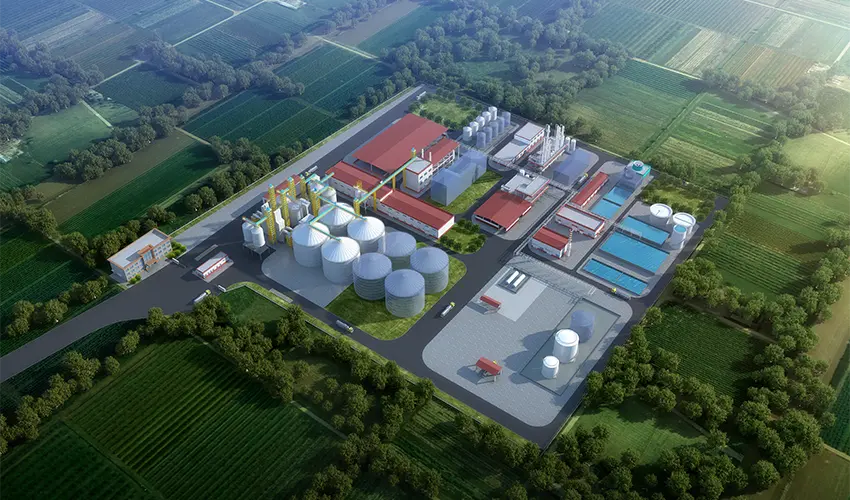
The core conversion pathway follows a sequence of unit operations, each dependent on the others for both mass and energy balance. Cleaned corn enters a milling system where particle size distribution directly influences starch release and downstream viscosity. In liquefaction, thermostable alpha-amylase breaks long starch chains into shorter dextrins under controlled temperature and pH. Saccharification follows with glucoamylase, converting dextrins into fermentable glucose. Yeast then converts glucose into ethanol in a continuous fermentation setup, producing a beer with roughly 10 to 12 percent ethanol by volume. Distillation separates ethanol from water and non-volatile solids in a multi-column configuration that includes a stripper, rectifier, and side strippers for fusel oil removal. The final step passes the near-azeotropic ethanol through a molecular sieve dehydration unit that adsorbs residual water, yielding anhydrous ethanol at better than 99.5 percent purity.
What changes outcomes at every one of these stages is not the presence of the equipment but the integration logic applied across them. Heat released during distillation, for example, can preheat the mash or drive evaporators that dry whole stillage into distiller’s dried grains with solubles. Without that integration, the plant purchases extra fuel and misses the opportunity to turn a waste stream into a saleable feed ingredient. I have observed projects where a five-day fermentation cycle was reduced to less than three days not by upgrading fermenter volume but by tightening the thermal coupling between liquefaction and distillation. The same thinking applies to water: process condensate from the distillation columns can be polished and reused in milling and liquefaction, cutting freshwater intake by more than half.
The reliability of the process rests on the selection and sizing of major equipment items that tend to become process bottlenecks if undersized or poorly matched. The table below groups the principal machines by function.
| Process Stage | Core Equipment | Typical Sizing Driver |
|---|---|---|
| Feedstock Preparation | Rotary screen, magnetic separator, aspirator, hammer mill | Corn throughput and foreign matter load |
| Liquefaction–Saccharification | Jet cooker, liquefaction tank, saccharification vessel, enzyme dosing system | Mash flow rate and residence time distribution |
| Fermentation | Continuous fermenter train, yeast propagation system, CO₂ scrubber | Ethanol production rate and yeast viability |
| Distillation–Dehydration | Stripper column, rectifier column, molecular sieve unit, condensed water recovery | Feed ethanol concentration and product purity spec |
| By-Product Recovery | Decanter centrifuge, DDGS dryer, biogas anaerobic digester, CO₂ liquefaction | Whole stillage volume and biogas potential |
Sizing decisions made in isolation create expensive problems later. A decanter centrifuge undersized relative to the fermenter output forces the dryer to handle higher moisture cake, which backs up into distillation and ultimately limits plant throughput. The fermenter itself needs careful alignment with the distillation column heat balance because the column reboiler duty depends on the beer ethanol concentration, which in turn depends on fermenter residence time. These interdependencies are the reason that a full EPC approach, where process design and equipment procurement are handled as one scope, tends to deliver a more stable start-up than piecemeal purchasing.
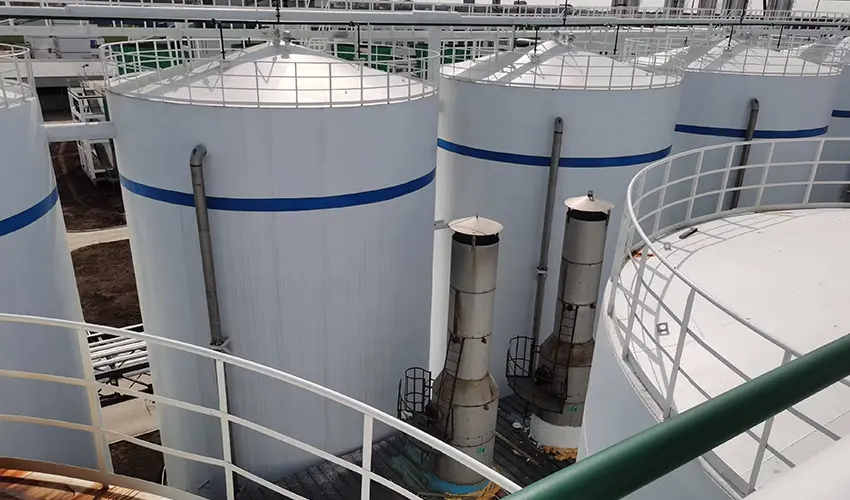
Midway through the equipment definition phase, a common fork appears: whether to include the CO₂ liquefaction and DDGS drying systems immediately or to phase them later. If the plant is located in a region with a nearby livestock feed market and beverage-grade CO₂ off-taker, deferring either system introduces a revenue gap that is hard to close later because the piping and utility tie-ins are already fixed. Discussing the local co-product market conditions with the engineering team during basic engineering, rather than after the plot plan is frozen, often saves more capital than any single equipment negotiation. For projects where the co-product revenue stream is still under development, reach out to our team at bjhn@agrifamgroup.com to evaluate which options can be configured early without locking out future expandability.
A fuel ethanol plant that consumes more thermal energy per liter of product than it displaces in transportation fuel undermines its own sustainability claim. The most effective response is to use energy not once but in cascade: high-pressure steam first drives the turbine that powers the molecular sieve blower and compressor, then medium-pressure condensate supplies the distillation reboiler, and finally low-grade exhaust heat dries the DDGS or warms the corn intake in cold climates. In plants I have been involved with, this sequencing can reduce total steam consumption by roughly one quarter compared with a design that produces steam for each user independently from the boiler, though the exact number depends on the temperature pinch points in the heat exchanger network.
Water integration is the other side of the energy coin. The distillation step produces substantial volumes of hot condensate that, if simply cooled and discharged, represents both energy and water loss. Returning this condensate as makeup water for the liquefaction jet cooker and the fermentation cooling jackets recovers both the heat and the water, cutting the plant’s net water intake to less than three liters per liter of ethanol produced. When the stillage is further dewatered through centrifuges and the thin stillage recycled as backset, the water loop becomes nearly closed, with only evaporative losses from the cooling tower needing make-up from the fresh water supply.
Biogas generated from the anaerobic treatment of process wastewater adds another layer of energy self-sufficiency. The digester gas, mostly methane, can fire a boiler or a combined heat and power unit, offsetting a portion of the purchased fuel. A plant that already integrates distillation heat recovery and DDGS drying may find that biogas provides the final increment needed to reach a net energy balance that qualifies for low-carbon fuel standards in its target market.
The difference between a constructed plant that reaches nameplate capacity within two months of start-up and one that takes six months of troubleshooting often traces back to the project delivery model. An engineering, procurement, and construction contract that covers process design, equipment manufacturing, civil works, installation, commissioning, and operator training under a single scope eliminates the interface gaps that cause delays. The project moves through clearly defined milestones: feasibility study and basic engineering package, detailed design and equipment procurement, on-site construction and mechanical completion, cold and hot commissioning, and performance testing against guaranteed parameters. Each gate requires signed acceptance before the next phase begins, which protects the owner from carrying forward unresolved design issues.
My experience across multiple agricultural processing projects has shown that the schedule risk concentrates not in the delivery of the main columns and fermenters but in the integration points: the piping between the distillation area and the DDGS building, the control system interface between the DCS and the boiler management system, and the coordination of utility tie-ins that require plant-wide shutdowns if they are not sequenced correctly. A single EPC team that owns the entire scope from day one can plan these tie-ins during detailed engineering rather than discovering them during construction.
Commissioning is the final gate and the one that demands the most operator involvement. We run the plant through clean water circulation first, then progressively introduce corn and enzymes, measure conversion yields at each stage, and only then bring the yeast and distillation columns online. This step-by-step approach validates the design assumptions against real operating data before the plant is handed over. When our team delivers a project, the performance test run is not the first time the plant runs at full rate; it is the formal confirmation that the systems already operating stably can meet the guaranteed ethanol output, steam consumption, and water usage figures that were set in the basic engineering package.
The economic logic of an anhydrous ethanol plant depends as much on the co-product revenue line as on the ethanol price. Whole stillage, which contains all the non-starch components of the corn kernel plus yeast biomass, can be dewatered and dried into DDGS that competes with soybean meal in ruminant, poultry, and swine rations. The protein content, fiber digestibility, and absence of mycotoxins become a pricing lever if the dryer operation maintains low-temperature drying that preserves amino acid availability. Carbon dioxide from fermentation, after scrubbing, compression, and liquefaction, meets food-grade standards and supplies the beverage, greenhouse, and chemical industries. With a typical yield of roughly 0.75 kilogram of CO₂ per kilogram of ethanol produced, the revenue from CO₂ alone can cover a meaningful fraction of the plant’s operating expenses.
The stillage-to-biogas route adds another dimension: anaerobic digestion of the thin stillage or the excess wastewater generates biogas that can be upgraded to biomethane and injected into a gas grid or used directly in a boiler. When the plant locates near a gas off-taker or uses the biomethane to replace diesel in the corn transport fleet, the carbon accounting improves further. Building the anaerobic digester during the initial construction, rather than retrofitting it later, avoids the interruption of production and the cost of bypass piping.
These co-product streams are not add-ons. They are part of the same mass balance that produces the ethanol. Treating them as separate investment decisions leads to a plant that leaves money in the stillage and off-gas. Designing them in parallel with the main process results in a facility that can withstand low ethanol price cycles because the feed and CO₂ revenues keep cash flow positive when the fuel margin is thin.
If your project involves a specific corn variety, ethanol grade target, or co-product offtake arrangement, the process configuration should reflect those inputs from the start. Send your project parameters and capacity requirements to bjhn@agrifamgroup.com or call 010-8591 2286, and we will propose a plant layout and equipment line-up matched to your commercial model.
A practical minimum for a greenfield plant that can recover its capital cost at typical corn and ethanol price spreads is around fifty million liters per year. Below that mark, the fixed costs of feedstock receiving, wastewater treatment, and utility infrastructure consume too large a share of the revenue. Smaller capacities can work if the plant co-locates with an existing grain processing facility that already carries those infrastructure costs, sharing the utility yard and logistics.
Yes, but not without adding intermediate storage and polishing equipment. The base fermentation and distillation setup produces ethanol that can be directed either to the molecular sieve for fuel-grade anhydrous product or to a rectification polishing column for industrial solvent or food-grade neutral spirit. The critical difference lies in the post-distillation handling: food-grade alcohol demands stainless steel storage, dedicated loading systems, and traceability documentation that are not required for fuel. We have configured plants with split product tanks so that the same distillation train serves multiple markets, switching grades according to customer orders.
A full EPC project for a 100-million-liter plant typically runs 18 to 24 months from contract effective date to mechanical completion, assuming no unusual site conditions or permit delays. Detailed engineering occupies the first four to five months while long-lead equipment such as the molecular sieve unit and fermentation vessels enters procurement. Civil works and steel erection follow overlapping with equipment installation. Commissioning and performance testing add another two to three months. The schedule compresses slightly if the owner chooses to use pre-engineered modules for the utility systems, but the core process equipment lead times remain the pacing items.
Yes. The commissioning phase includes on-site training for operators, shift supervisors, and the maintenance crew. This covers normal start-up and shutdown procedures, troubleshooting of typical process deviations, and preventive maintenance on the major rotating equipment. We also supply operating manuals, process control narratives, and a spare parts list indexed to the equipment tag numbers. After handover, remote support is available for the first operating season, and on-site service visits can be arranged for scheduled shutdowns and catalyst or adsorbent replacement intervals.
The main permits include an environmental impact assessment approval, a construction permit, a pollutant discharge permit covering wastewater, boiler stack emissions, and solid waste disposal, and a fire safety acceptance certificate for the alcohol storage area. The wastewater discharge standard is usually the tightest regulatory requirement because stillage contains high organic load. An anaerobic treatment system followed by aerobic polishing is the standard approach, and the design basis for the treatment plant should be submitted with the EIA to demonstrate that discharge will meet the local receiving water standards. Share your site location and we can outline the permit pathway that applies to your jurisdiction.
If you’re interested, check out these related articles:
Driving Global Food Conservation Through Technological Innovation






bjhn@agrifamgroup.com