EN
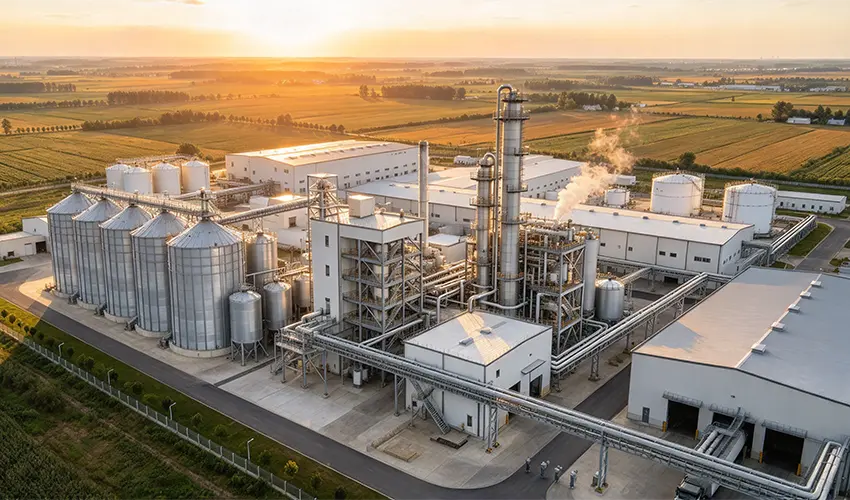
AGRIFAM provides diversified, high-quality, customized maltitol solutions based on advanced sugar-alcohol engineering, precision processing, and intelligent system integration.
Using starch, high-purity maltose syrup is produced through liquefaction and saccharification, then refined by filtration, decolorization, and continuous ion exchange before high-pressure hydrogenation with a nickel catalyst. After reaction, the nickel catalyst is recovered by filtration; the maltitol solution is decolorized, ion-exchanged, and concentrated to liquid maltitol. For crystalline product, further chromatographic purification and crystallization yield high-purity crystalline maltitol. AGRIFAM delivers not just a production line but manufacturing capability with stable supply, batch consistency, high-purity control, catalyst recovery, compliance traceability, cost efficiency, flexible expansion, and intelligent operation.
AGRIFAM aims to be a trusted turnkey partner for maltitol smart factories.
 Intelligent control
The digital management platform precisely optimizes production parameters are precisely optimized by digital management platform to ensure stable quality and controllable costs.
Technological Strength Support
We possess mature core process technologies including liquefaction, saccharification, filtration, decolorization, ion exchange, concentration, crystallization, and drying, ensuring stable product quality and precise, controllable quality parameters.
Professional Team
We have a professional application technology team capable of providing customers with product selection advice, formulation optimization support, and problem-solving solutions.
Improve design efficiency
Effectively optimize the design process, precisely control material selection and usage, significantly shorten the design cycle, and avoid design deviations and material waste.
Mix starch with water to prepare starch milk, and adjust the pH to a slightly acidic range to provide stable starting conditions for the subsequent enzymatic hydrolysis reaction.
Add thermostable α-amylase to cleave the long starch chains into short-chain dextrins at high temperature, rapidly reducing viscosity. Maltitol production has special requirements for the degree of liquefaction: in order to create a suitable substrate for the subsequent β-amylase and other enzymes, liquefaction is usually controlled at a relatively low DE value rather than pursuing deep hydrolysis. In industry, two-stage jet liquefaction is commonly used to achieve a uniform and mild liquefaction effect.
This is the key step in preparing the precursor for maltitol. The goal is not to produce glucose, but to maximize the formation of maltose (DP₂). After cooling and pH adjustment, multiple enzymes are usually required to act synergistically, including β-amylase and debranching enzymes. Some processes also supplement maltose-forming enzyme or α-amylase in the late stage of saccharification to further optimize the sugar composition. At the same time, the glucose content is controlled at a very low level, because glucose is hydrogenated to sorbitol, which becomes an impurity requiring subsequent separation.
The saccharified liquid is subjected to processes such as filtration, decolorization, and ion exchange to remove impurities including insoluble residues, pigments, inorganic salts, and proteins, yielding a clean high-maltose syrup. The purity at this step directly affects the hydrogenation efficiency and the quality of the finished maltitol. If chromatographic separation and purification are subsequently adopted, the cleanliness of the saccharified liquid is also crucial.
For crystalline maltitol or high-purity liquid products, the high-maltose syrup can be further purified by simulated moving bed (SMB) chromatographic separation. By exploiting the difference in resin adsorption affinity between maltose and other sugar components, this provides a higher-quality substrate for hydrogenation and reduces the burden of impurity separation after hydrogenation.
The refined maltose syrup is evaporated and concentrated to the concentration required for the hydrogenation reaction, so as to reduce the amount of water in the reaction system and improve hydrogenation efficiency.
In the presence of a catalyst, hydrogen is introduced to reduce the reducing terminal aldehyde group of maltose to a hydroxyl group, producing maltitol. The reaction is continued until hydrogen absorption stops or the residual sugar drops to the target level. The hydrogenation conversion and selectivity determine the maltitol content in the finished product and the proportion of by-products such as sorbitol.
The hydrogenated liquid is first filtered to recover the catalyst (the catalyst can usually be recycled and reused), and then decolorized and subjected to ion exchange (or membrane filtration) to remove dissolved impurities and colored substances, yielding a refined maltitol liquid. Some processes also introduce chromatographic separation at this stage to further separate maltitol from impurities such as sorbitol produced during hydrogenation, so as to meet the requirements for crystallization or high-end liquid products.
The refined maltitol liquid is vacuum-concentrated to the specified concentration, yielding liquid maltitol as the finished product, which can be directly used in foods, sugar-free candy, and other fields.
If the target is crystalline maltitol, the high-purity maltitol liquid is further concentrated, cooled, and seeded with crystals, followed by crystallization under controlled temperature to precipitate maltitol crystals. The massecuite is subjected to centrifugal separation, washing, and drying to obtain finished crystalline maltitol; the centrifugal mother liquor is usually recycled to the refining or decolorization process for recovery and reuse.
bjhn@agrifamgroup.com