EN
Evaluating ethanol feasibility at the project planning stage involves far more than confirming that fermentation and distillation will work. The technical capability to produce fuel ethanol from corn is well understood. What separates a plant that underwhelms from one that delivers consistent returns is the degree to which the economic model accounts for co-product revenue, energy integration, and the capital discipline of a fully engineered solution. In our experience structuring corn ethanol investments across multiple geographies, the feasibility study that treats by-product streams as an afterthought will almost always underestimate the true margin structure of the operation.
Corn ethanol production relies on a chain of unit operations that must be sized, specified, and sequenced for a target throughput. The core process starts with grain receiving and cleaning, moves through hammer milling and jet cooking for starch gelatinization, then into continuous liquefaction and saccharification where enzymes convert starch to fermentable sugars. Fermentation follows, using proprietary yeast strains in continuous or fed-batch systems, before the beer column and rectification column strip and concentrate the ethanol. The final step for fuel-grade product is dehydration, typically via molecular sieve adsorption units that bring ethanol above 99.5% purity without the azeotropic distillation complexity older plants once carried.
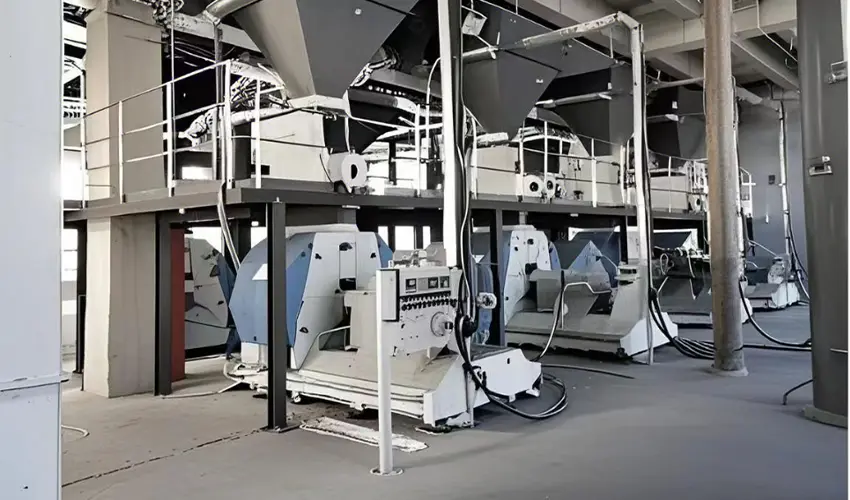
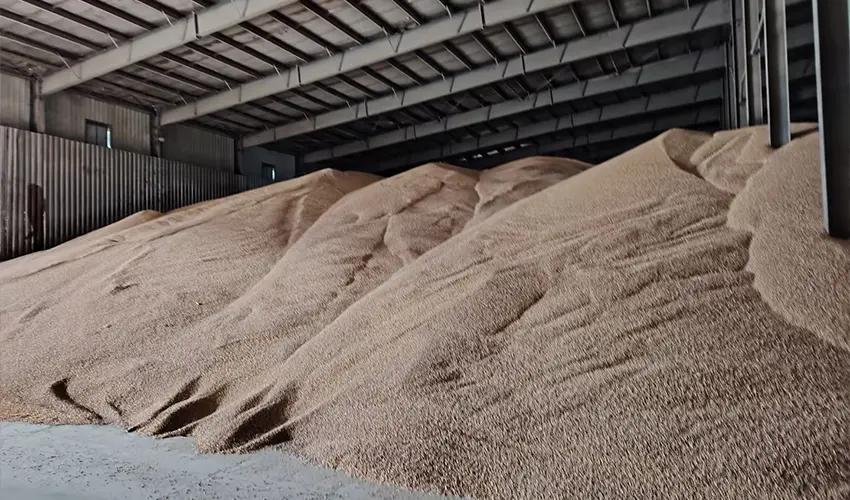
At each stage, the design choices determine not just capital cost but long-term operational stability. A plant sized for 150,000 tons of ethanol per year will require consistent corn supply, so the grain storage and handling system upstream must be engineered to prevent spoilage and maintain throughput even during seasonal price windows. Similarly, the fermentation cooling system and the stillage handling train downstream become bottlenecks if they are undersized during the FEED study.
Continuous fermentation systems sustain yeast populations at peak metabolic activity while removing ethanol as it forms, reducing product inhibition. Compared to batch fermentation, continuous operation shortens cycle times and raises volumetric productivity by 20–30%, though the trade-off is the need for rigorous aseptic control and consistent feedstock quality. For a feasibility study, this translates into a higher upfront investment in heat exchangers and sterilization but measurably lower operating cost per liter over the plant’s twenty-year life.
Molecular sieves exploit the small pore size of synthetic zeolites to adsorb water molecules from the ethanol-water azeotrope while excluding the larger ethanol molecule. The system operates in a pressure swing cycle that avoids the high energy demand of azeotropic distillation, reducing steam consumption to roughly 0.5–0.7 kg per liter of anhydrous ethanol. In feasibility modeling, it is not the capital cost of the dehydration unit itself that matters most; it is the integration of the regeneration steam with the plant’s overall heat balance, because mismatched steam demand can erode much of the energy advantage.
The capital intensity of a corn ethanol project is concentrated in the processing island, utilities, and grain handling, with total installed cost for a 150,000-ton-per-year facility typically ranging between USD 80 million and USD 120 million depending on location, scope of auxiliary systems, and the depth of by-product handling included. The feasibility study must allocate costs across clear categories to test sensitivity.
| Cost Category | Typical Share of Total CAPEX | Key Sensitivity Driver |
|---|---|---|
| Grain receiving and storage | 12–15% | Corn supply radius and local storage infrastructure |
| Process island (milling, fermentation, distillation, dehydration) | 40–45% | Technology licensor, equipment material of construction |
| Utilities and energy systems | 18–22% | Availability of natural gas and grid electricity pricing |
| By-product handling (DDGS drying, CO₂ capture, biogas) | 10–14% | Co-product market depth and off-take contracts |
| Balance of plant, civil, EPC management | 10–15% | Site conditions, permitting timeline, logistics |
Operational expenses are dominated by corn feedstock, which can represent 60–70% of total production cost, followed by natural gas for steam generation and enzymes for conversion. A one-dollar-per-bushel swing in corn price can shift the break-even ethanol price by over USD 0.08 per liter, which is why a feasibility study that relies on flat corn price forecasts ignores the single largest source of margin risk.
Under a project finance structure with 60–40 debt-to-equity and realistic ethanol and DDGS price curves, a well-engineered plant can achieve payback in six to eight years. The key is not ethanol price alone; it is the stability of co-product revenue that shortens the payback. When DDGS and CO₂ offtake agreements are included in the base case, the project IRR can increase by three to five percentage points, which changes the entire financing conversation.
Corn price is the dominant variable. A plant designed to process one million metric tons of corn per year will see a one-dollar increase in the bushel price translate into roughly USD 7 million in additional annual cost. Without a defensive procurement strategy that includes physical hedging, storage capacity, and alternative sourcing corridors, the project’s debt service coverage ratio can be breached within the first two years. That kind of stress test belongs in any defensible feasibility assessment.
If your project involves feedstock sourcing across multiple provinces or import corridors, the logistics cost piece requires early modeling. In our work structuring projects in China and South America, the difference between a plant sited within a dense corn production zone and one that relies on rail haulage over 300 km can add ten to fifteen percent to delivered grain cost, which over the project life reshapes the feasibility result entirely. Reach out at bjhn@agrifamgroup.com to discuss how we map feedstock availability and logistics cost into the pre-feasibility stage.
While ethanol production economics are often presented as a function of fuel price, the actual margin structure of a modern plant depends on three by-product lines: distiller’s dried grains with solubles, liquid carbon dioxide, and biogas from anaerobic digestion of thin stillage. Together these streams can contribute 15–25% of total plant revenue, turning what looks like a breakeven ethanol operation into a solid cash generator.
In a plant producing 150,000 tons of ethanol, roughly 450,000 tons of wet distiller’s grains leave the centrifuge, which after drying yields about 140,000 tons of DDGS. At international DDGS prices of USD 220–260 per ton, that generates USD 30–36 million in additional annual revenue. Food-grade liquid CO₂, recovered from the fermenter off-gas by compression and purification, adds another USD 3–5 million depending on local beverage and industrial gas demand. Biogas captured from the wastewater treatment system can offset 15–25% of the plant’s natural gas requirement when fed to the boiler, reducing the single largest controllable operating cost.
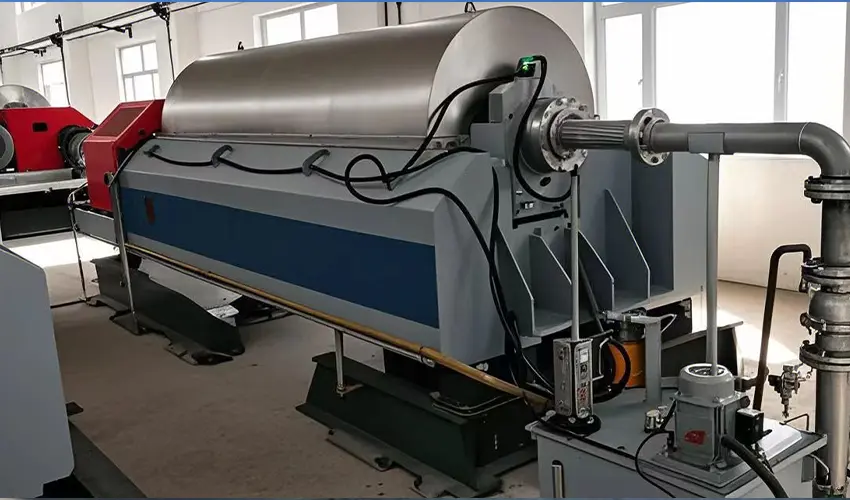
The feasibility study must treat these revenue streams not as optional add-ons but as design inputs that dictate the equipment list from day one. Choosing to defer CO₂ recovery or biogas capture to a later phase often means the plant layout and utility sizing cannot accommodate them without costly retrofits.
DDGS can contribute up to 20% of a plant’s total revenue, and because it is a co-product rather than a by-product in the economic sense, its volume is directly tied to corn throughput. This means that while ethanol price volatility gets the attention, DDGS prices often trend with soybean meal and corn gluten feed, providing a partial natural hedge against high corn input costs. The feasibility model should reflect this correlation, not treat DDGS as an independent variable.
The CO₂ from fermentation is biogenic and, once purified to food-grade specification, can serve beverage carbonation, modified atmosphere packaging, and industrial cooling. The challenge is not capture technology, which is mature, but ensuring a consistent offtake arrangement before the capital is committed. In our project planning, we recommend early engagement with industrial gas distributors or regional beverage producers to anchor the CO₂ investment in a verifiable demand signal.
A corn ethanol plant that only looks at ethanol per bushel misses the larger efficiency envelope. The AGRIFAM approach to alcohol production solutions applies energy cascade utilization, where high-grade heat from distillation columns is cascaded into lower-temperature processes such as evaporation and drying, reducing total steam consumption by up to 25%. Waste heat recovery from flue gas and condensate return systems further lowers the plant’s thermal load.
This philosophy extends to the full circular model: corn enters the front gate, ethanol leaves as fuel, DDGS feeds livestock, CO₂ serves the food and beverage sector, and biogas powers the boiler. The result is a closed-loop industrial chain where effectively 100% of the incoming corn mass is monetized. For a feasibility study, the operational cost savings from this integration can shift the project IRR by five percentage points or more compared to a conventional design that vents CO₂ and flares biogas.
Yes, though the exact figure depends on the baseline configuration. A plant equipped with multi-effect evaporation, vapor recompression on the DDGS dryer, and a flue gas economizer can reduce natural gas consumption from roughly 3.0–3.5 GJ per ton of ethanol to around 2.2–2.5 GJ. At industrial gas prices in Asia or Latin America, that represents a USD 8–12 per ton reduction in production cost, easily exceeding 15% of total energy spend.
Anaerobic digestion of thin stillage produces biogas with 55–65% methane content, which after hydrogen sulfide scrubbing can be fired directly in a dual-fuel boiler. A 150,000-ton ethanol plant can generate enough biogas to displace 5–8 million cubic meters of natural gas annually. The capital case for biogas tightens when carbon pricing or voluntary sustainability commitments enter the equation, making it a likely requirement rather than an option in future regulatory environments.
When the technical and economic feasibility confirms a viable project, the transition to implementation requires a clear scope of work that carries the same integrated mindset. At AGRIFAM, we deliver complete EPC solutions for grain-based alcohol and fuel ethanol production, meaning the engineering, procurement, construction, and commissioning are managed under a single responsibility framework. This avoids the common pitfall of a feasibility study that optimizes one unit operation in isolation only to discover that the interfaces between process islands create hidden costs.
The turnkey approach also locks in the by-product integration and energy efficiency measures as baseline scope, not value-engineering candidates to be stripped out during cost-cutting rounds. A project that enters construction with the CO₂ recovery system and biogas digester as part of the original contract will commission a plant that produces the margins the feasibility study projected.
Commissioning begins with mechanical completion and pre-commissioning checks on each system, followed by water runs and solvent runs to validate pump curves, heat exchanger performance, and control loops. The first grain-in milestone typically occurs twelve to eighteen months after construction start, with full performance testing completed within three months of initial startup. The feasibility schedule must account for a three- to six-month ramp-up period during which the plant operates at reduced throughput while operators fine-tune process parameters and enzyme dosing.
A corn ethanol feasibility study that limits itself to ethanol price scenarios and a generic capital cost estimate is essentially incomplete. The projects that secure financing and deliver returns are those where the study demonstrates command of the entire material balance: corn in, ethanol out, and every co-product stream monetized or offsetting cost. Energy integration, biogas capture, CO₂ purification, and DDGS drying are not second-phase options. They are the primary levers that determine whether the plant sits in the upper or lower quartile of the industry cost curve.
If you are preparing a feasibility study for a corn ethanol project, the technical and commercial assumptions you embed at this stage will govern the project’s trajectory for two decades. We work with investors, developers, and industrial groups to structure feasibility assessments that reflect real engineering data, not generic benchmarks, and that can be carried directly into bankable EPC documentation. Contact us at bjhn@agrifamgroup.com or call 010-8591 2286 to share your project scope, feedstock profile, and target product specifications, and we will build a feasibility framework that matches the commercial reality.
The economics of scale in corn ethanol are significant. Below 100,000 tons per year, the capital cost per unit of capacity rises sharply, and the fixed cost burden of management, quality control, and logistics erodes margins. In most markets, a plant needs at least 100,000 tons of annual ethanol capacity to compete, with the sweet spot between 150,000 and 300,000 tons depending on feedstock availability and local demand for co-products.
From the completion of a bankable feasibility study, a full EPC execution typically spans 24 to 30 months through mechanical completion, with an additional three to six months for commissioning and performance testing. The pre-feasibility and FEED engineering phase adds six to twelve months before construction begins. A realistic total timeline from concept to commercial operation is three to four years.
The environmental impact assessment is the gatekeeper document, covering air emissions from grain drying and DDGS drying, wastewater discharge from the process, and potential odor impacts on nearby communities. In many jurisdictions, the EIA must also address the plant’s water consumption and carbon footprint, which is where integrated biogas and heat recovery designs become important in securing approval.
The core processing equipment for fermentation and first-stage distillation is common across fuel, medical, and edible alcohol grades. The differentiation occurs in the rectification and polishing columns and in the post-distillation treatment. Adding a dedicated rectification train and clean-in-place capability during the initial design allows the plant to produce pharmaceutical-grade alcohol alongside fuel ethanol without a full rebuild, though this flexibility adds approximately 8–12% to total capital cost. If your product slate includes multiple grades, specify this during feasibility rather than trying to retrofit later. Send your intended product mix and target quality standards to bjhn@agrifamgroup.com, and we will assess the configuration options for your project.
If you’re interested, check out these related articles:
Driving Global Food Conservation Through Technological Innovation







bjhn@agrifamgroup.com