EN
Corn alcohol production begins with a simple agricultural input and ends with a precisely controlled industrial output. The process converts starch molecules into fermentable sugars, transforms those sugars into ethanol through yeast metabolism, and then separates and purifies the alcohol to meet specific grade requirements. Whether the end product is fuel ethanol at 99.5% purity or pharmaceutical grade anhydrous alcohol, the manufacturing pathway follows the same fundamental sequence. I have worked on grain deep processing projects where the difference between a profitable operation and a struggling one came down to how well each stage was integrated with the next. The margin for error is narrow, and the decisions made at the front end of the process ripple through every downstream operation.
Raw corn arriving at an alcohol plant carries contaminants that will damage equipment and compromise product quality if not removed. The purification sequence typically includes rotary screens to separate oversized debris, magnetic separators to extract metal fragments, destoners to remove rocks and dense foreign matter, and aspirators to pull out lightweight chaff and dust. A single stone passing through a hammer mill can destroy grinding plates and halt production for hours.
Moisture content matters as much as cleanliness. Corn stored at moisture levels above 14% creates mold growth that produces mycotoxins, which inhibit yeast activity during fermentation. Most facilities specify incoming corn at 13% to 14% moisture, verified by near infrared analyzers at the receiving pit. The starch content of the corn directly determines alcohol yield. Number 2 yellow dent corn typically contains 70% to 72% starch on a dry basis, translating to a theoretical yield of approximately 2.8 gallons of anhydrous ethanol per bushel. Actual yields run closer to 2.7 to 2.85 gallons depending on process efficiency and corn quality.
| Parameter | Specification | Impact on Process |
|---|---|---|
| Moisture content | 13% to 14% | Prevents mold, ensures accurate dosing |
| Foreign material | Less than 2% | Protects milling equipment |
| Test weight | 54 lb/bu minimum | Indicates starch density |
| Damaged kernels | Less than 5% | Reduces enzyme demand |
The milling stage determines how efficiently enzymes can access starch granules. Two approaches dominate the industry: dry milling and wet milling. Dry milling grinds the entire kernel into flour or meal, while wet milling separates the kernel into its component fractions before processing. Fuel ethanol plants almost universally use dry milling because of lower capital costs and simpler operations. Wet milling is reserved for facilities producing multiple products such as corn oil, gluten meal, and fiber alongside alcohol.
In dry milling, hammer mills reduce corn kernels to a particle size distribution where 70% to 80% passes through a 2.0 mm screen. Finer grinding increases surface area for enzyme contact but also increases energy consumption and can create handling problems with sticky slurries. The ground corn, called meal, is mixed with water at a ratio of approximately 2.5 to 3.0 gallons of water per bushel of corn to create a mash.
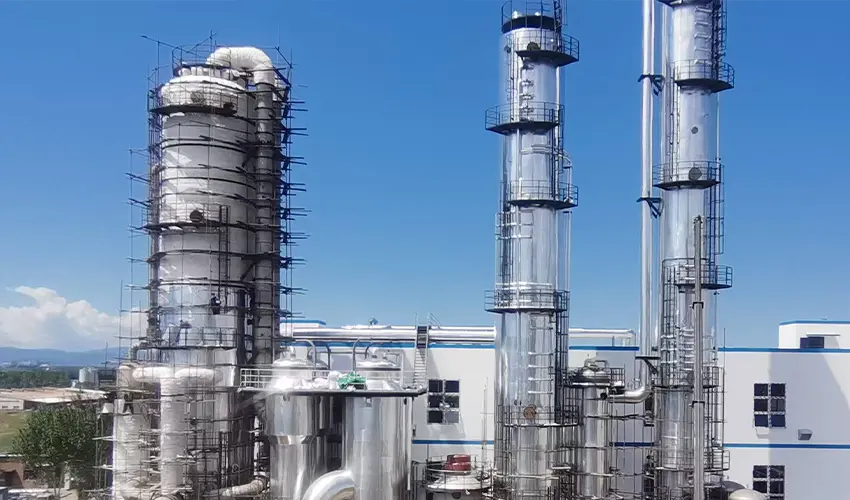
The slurry enters the liquefaction stage at temperatures between 85°C and 90°C. Alpha amylase enzymes break the long chain starch molecules into shorter dextrins. This enzyme requires calcium ions as a cofactor and operates optimally at pH 5.8 to 6.2. Liquefaction typically runs for 90 to 120 minutes, during which viscosity drops dramatically as the starch gelatinizes and then breaks down. Operators monitor viscosity continuously because incomplete liquefaction creates problems in fermentation and distillation.
Following liquefaction, the mash must be cooled to fermentation temperature, typically 30°C to 34°C. During this cooling, glucoamylase enzymes are added to convert dextrins into glucose. This saccharification step can run as a separate batch process, but most modern facilities use simultaneous saccharification and fermentation, where glucoamylase and yeast are added together. The yeast consumes glucose as quickly as the enzyme produces it, preventing sugar accumulation that would inhibit enzyme activity.
Saccharomyces cerevisiae yeast strains engineered for fuel ethanol production can tolerate ethanol concentrations up to 15% to 18% by volume. Fermentation runs for 48 to 72 hours depending on mash concentration and temperature control. The biochemical reaction is straightforward: one molecule of glucose yields two molecules of ethanol and two molecules of carbon dioxide. The theoretical yield is 51.1% ethanol by weight from glucose, but actual yields run around 90% to 93% of theoretical due to yeast metabolism diverting some sugar to cell growth and byproduct formation.
Temperature control during fermentation is critical. Yeast metabolism generates heat, and temperatures above 35°C stress the organisms, reducing yield and increasing production of undesirable congeners. Large fermentation vessels require cooling systems capable of removing 1,000 to 1,500 BTU per gallon of ethanol produced. The carbon dioxide released during fermentation can be captured, purified, and sold as food grade liquid CO2, creating an additional revenue stream that improves project economics.
The fermented mash, called beer, contains 10% to 15% ethanol along with water, yeast cells, unfermented solids, and dissolved compounds. Distillation exploits the difference in boiling points between ethanol (78.4°C) and water (100°C) to concentrate the alcohol. A typical fuel ethanol plant uses a multi column distillation system with a beer column, a rectifying column, and sometimes a side stripper.
The beer column receives preheated mash and strips ethanol from the liquid, producing a vapor stream containing 50% to 60% ethanol. This vapor feeds into the rectifying column, where repeated vaporization and condensation stages concentrate the ethanol to approximately 95% by volume. This concentration represents the azeotropic limit, the point where ethanol and water form a constant boiling mixture that cannot be further separated by conventional distillation.
| Distillation Stage | Input Concentration | Output Concentration | Energy Consumption |
|---|---|---|---|
| Beer column | 10% to 15% | 50% to 60% | 18,000 to 22,000 BTU/gal |
| Rectifying column | 50% to 60% | 92% to 95% | 8,000 to 12,000 BTU/gal |
| Molecular sieve | 92% to 95% | 99.5%+ | 2,000 to 4,000 BTU/gal |
The stillage remaining after distillation contains all the non fermentable components of the corn: protein, fiber, fat, and minerals. This material is processed into distillers dried grains with solubles (DDGS), a high protein animal feed that represents 30% to 35% of the revenue from a typical fuel ethanol plant. The thin stillage is concentrated in evaporators, and the syrup is mixed with wet grains before drying. DDGS typically contains 27% to 30% protein and serves as a valuable feed ingredient for cattle, swine, and poultry operations.
Fuel ethanol specifications require anhydrous product containing less than 1% water, typically 99.5% purity or higher. The azeotropic limit of conventional distillation means additional dehydration technology is required. Two approaches are used commercially: azeotropic distillation with an entrainer such as benzene or cyclohexane, and pressure swing adsorption using molecular sieves.
Molecular sieve technology has largely replaced azeotropic distillation because it eliminates the handling of hazardous entrainer chemicals and produces a cleaner product. The process passes 95% ethanol vapor through beds of synthetic zeolite with pore sizes of approximately 3 angstroms. Water molecules are small enough to enter the pores and become trapped, while ethanol molecules pass through. The adsorbed water is periodically removed by reducing pressure, regenerating the sieve for the next cycle.
A typical molecular sieve unit operates with two or three beds cycling between adsorption and regeneration. The system produces anhydrous ethanol at 99.5% to 99.9% purity with energy consumption of 2,000 to 4,000 BTU per gallon. The technology is reliable and requires minimal operator intervention once properly commissioned. I have observed that molecular sieve performance degrades over time as the zeolite becomes contaminated with oils and other compounds carried over from distillation. Bed replacement or regeneration is typically required every 3 to 5 years.
For applications requiring higher purity, such as pharmaceutical or electronic grade ethanol, additional purification steps are necessary. These may include activated carbon treatment to remove trace organics, ion exchange to remove dissolved minerals, and final filtration to remove particulates. Electronic grade ethanol for semiconductor manufacturing requires purity levels exceeding 99.99% with trace metal content measured in parts per billion.
Energy consumption represents 15% to 25% of the operating cost of a corn ethanol plant. Modern facilities achieve significant reductions through heat integration, where waste heat from one process stage supplies energy to another. The most common integration points include using distillation column overhead vapor to preheat incoming beer, recovering flash steam from stillage processing, and capturing waste heat from dryers to preheat combustion air.
Combined heat and power systems generate electricity from natural gas or biogas while capturing waste heat for process use. A well designed CHP system can reduce purchased energy by 25% to 30% compared to separate generation of steam and electricity. Biogas produced from anaerobic treatment of process wastewater provides a renewable fuel source that further reduces fossil fuel consumption and improves the carbon intensity score of the ethanol produced.
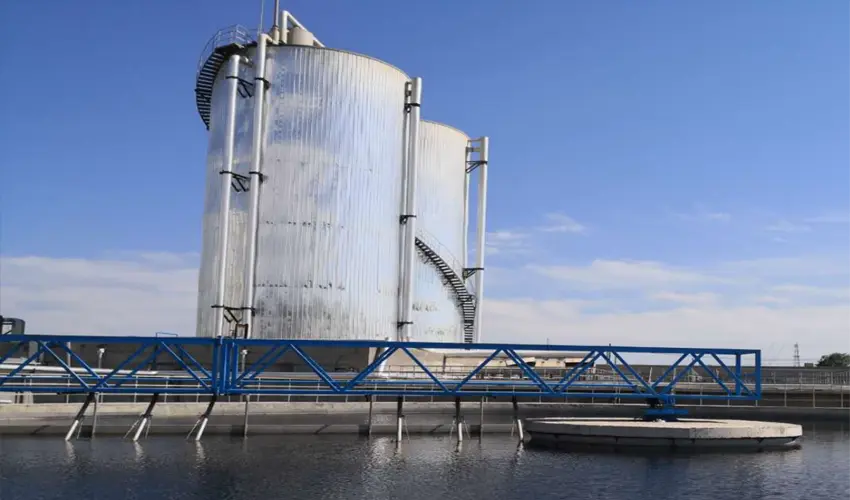
AGRIFAM’s approach to alcohol production emphasizes energy cascade utilization and closed loop resource management. The integration of biogas systems with wastewater treatment creates a circular economy model where organic waste becomes fuel, and the digestate becomes fertilizer. This systems thinking extends to every aspect of plant design, from grain receiving through product storage.
Ethanol yield depends primarily on the starch content of the corn and the efficiency of conversion at each process stage. Number 2 yellow dent corn with 72% starch content has a theoretical yield of 2.85 gallons per bushel. Actual yields of 2.7 to 2.8 gallons are typical, with losses occurring during fermentation (incomplete conversion, yeast metabolism), distillation (entrainment, incomplete stripping), and dehydration (product losses during regeneration). Corn quality, enzyme dosing, yeast health, and equipment maintenance all influence final yield. If you are evaluating a new project or troubleshooting an existing operation, discussing your specific corn supply and process parameters with an experienced engineering team can identify opportunities to close the gap between actual and theoretical yield.
The primary differences are purity specifications and regulatory requirements. Fuel ethanol must meet ASTM D4806 standards, which specify minimum 92.1% ethanol content, maximum water content, and limits on acidity, chloride, and copper. The product is denatured with gasoline to prevent diversion to beverage use. Industrial alcohol for solvent applications may have similar purity but different denaturant requirements. Beverage alcohol requires food grade production under strict regulatory oversight, with no denaturing and careful control of congeners that affect taste. The manufacturing equipment is similar, but the quality systems, documentation, and regulatory compliance requirements differ substantially.
Corn alcohol production generates three main byproducts: DDGS, carbon dioxide, and process wastewater. DDGS is dried and sold as animal feed, representing a significant revenue stream. Carbon dioxide can be captured, purified, and sold for beverage carbonation, food processing, or industrial applications. Process wastewater contains organic matter that can be treated anaerobically to produce biogas, which is then used as boiler fuel. The residual digestate contains nutrients that can be applied as fertilizer. A well designed facility achieves near zero waste by converting every stream into a saleable product or useful energy source. For project developers evaluating corn ethanol investments, understanding byproduct revenue is as important as understanding ethanol pricing. Contact our team at bjhn@agrifamgroup.com or call 010-8591 2286 to discuss how integrated byproduct systems can improve your project economics.
ASTM International — Standard Specification for Denatured Fuel Ethanol, 2021
USDA Economic Research Service — Corn and Other Feed Grains, 2024
U.S. Department of Energy — Biofuels Basics, 2024
If you’re interested, check out these related articles:
Driving Global Food Conservation Through Technological Innovation







bjhn@agrifamgroup.com