EN
Livestock waste is one of those problems that looks simple on paper but gets complicated fast once you start dealing with real volumes. A mid-sized dairy operation can produce thousands of gallons of manure daily, and that material doesn’t just sit there quietly. It releases ammonia, attracts flies, and if it reaches waterways, the nutrient load can trigger algae blooms that suffocate aquatic life. The regulatory environment has tightened considerably over the past decade, and farms that once managed waste through basic lagoon systems now face requirements for nutrient management plans, emission controls, and documented disposal protocols. What’s changed is the recognition that manure isn’t just waste—it’s a concentrated source of nitrogen, phosphorus, and organic matter that can be captured and reused. The engineering challenge lies in building systems that make this recovery economically viable while meeting environmental standards.
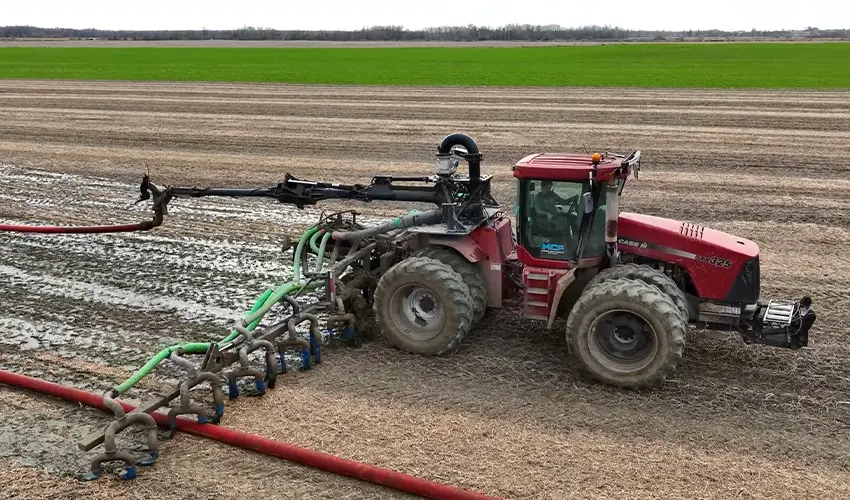
The scale of modern livestock operations has fundamentally changed the waste equation. A single confined animal feeding operation can generate more waste than a small city, yet without the municipal infrastructure to process it. When this material accumulates, the environmental consequences compound quickly. Nitrogen compounds volatilize into ammonia and nitrous oxide, contributing to both local air quality problems and global greenhouse gas inventories. Phosphorus binds to soil particles but eventually saturates the land’s absorption capacity, leading to runoff that contaminates surface water.
Regulatory agencies have responded with increasingly specific requirements. Environmental impact assessments now examine not just immediate discharge but cumulative watershed effects. Farms must demonstrate nutrient balance—showing that the nutrients applied to land don’t exceed what crops can actually absorb. These regulatory compliance livestock standards vary by jurisdiction, but the trend everywhere points toward tighter controls and more rigorous documentation.
The economic pressure runs parallel to the regulatory one. Disposal costs have risen as landfill restrictions tighten and hauling distances increase. Farms that treat livestock waste management as purely a cost center find themselves at a competitive disadvantage compared to operations that have figured out how to extract value from the material. This shift from disposal thinking to resource thinking represents the core of modern agricultural pollution prevention strategy.
The transformation of livestock waste from liability to asset depends on selecting the right processing technology for your operation’s scale, waste characteristics, and end-use goals. No single approach works universally—dairy manure behaves differently than poultry litter, and a 200-head operation has different economics than a 10,000-head facility.
What are the most effective technologies for converting livestock manure into valuable resources?
| Technology | Primary Output | Environmental Benefit | Economic Benefit |
|---|---|---|---|
| Anaerobic Digestion | Biogas, Biofertilizer | GHG reduction, Odor control | Energy, Fertilizer sales |
| Composting | Organic Fertilizer | Soil health, Waste volume reduction | Fertilizer sales, Soil amendment |
| Nutrient Recovery | Concentrated Nutrients | Water quality protection | Reduced fertilizer costs |
| Solid-Liquid Separation | Solid compost, Liquid fertilizer | Easier handling, Reduced transport costs | Value-added products |
Anaerobic digestion works by creating conditions where specific bacteria can break down organic matter without oxygen. The process happens in sealed tanks where temperature, pH, and retention time are carefully controlled. As bacteria consume the volatile solids in manure, they produce biogas—a mixture that’s typically 50-70% methane, with the balance mostly carbon dioxide.
This biogas production can offset a significant portion of a farm’s energy costs. Some operations generate enough electricity to sell back to the grid, turning their waste stream into a revenue source. The economics improve further when you factor in avoided disposal costs and potential carbon credits in jurisdictions that offer them.
The digestate left after biogas extraction retains most of the original nutrients but in a more stable, less odorous form. This biofertilizer applies more evenly than raw manure and releases nutrients more predictably, which helps with crop planning. The benefits of biofertilizer extend beyond nutrient content—the organic matter improves soil structure, water retention, and microbial activity over time.
Renewable energy farms increasingly incorporate digester systems as part of their sustainability infrastructure. The technology has matured enough that reliable performance is achievable, though success still depends on proper sizing, consistent feedstock quality, and competent operation.
Nutrient recovery systems address a specific problem: manure often contains more nitrogen and phosphorus than nearby cropland can absorb. Without intervention, these excess nutrients eventually reach water bodies, where they cause eutrophication and oxygen depletion.
Modern recovery systems can extract and concentrate these nutrients into forms that are economical to transport. Phosphorus recovery typically involves precipitation processes that capture phosphate as struvite or calcium phosphate—materials with established markets as slow-release fertilizers. Nitrogen recovery often uses stripping and absorption processes to produce ammonium sulfate or similar compounds.
The water quality protection benefits are substantial. By removing nutrients at the source, farms can apply the remaining liquid fraction at higher rates without exceeding agronomic limits. This approach aligns with nutrient management plans that regulators increasingly require, and it reduces the land area needed for manure application.
Soil health improvement follows when nutrient application matches crop uptake more precisely. Over-application of raw manure can actually harm soil biology and create salt accumulation problems. Recovered nutrients, applied at appropriate rates, support productive soils without the negative side effects.
Effective livestock waste management requires more than installing a single technology. The challenge involves integrating multiple systems that work together to address odor, emissions, water quality, and resource recovery simultaneously. This is where environmental engineering expertise becomes essential.

For further insights into how technological innovation drives global food conservation, explore our detailed analysis in 《Driving Global Food Conservation Through Technological Innovation》.
Odor control often determines whether a farm can maintain good relations with neighbors and avoid nuisance complaints. Covered storage, biofilters, and proper aeration can reduce odor emissions by 80% or more compared to open lagoons. These systems also capture volatile compounds that would otherwise contribute to air quality problems.
Lagoon treatment systems remain common, but their design has evolved considerably. Modern lagoons incorporate liners to prevent groundwater contamination, covers to capture biogas, and staged treatment to optimize biological processes. When properly designed, they can serve as the first stage in a more comprehensive treatment train.
Greenhouse gas emissions from livestock operations have drawn increasing scrutiny. Methane from manure storage represents a significant portion of agricultural emissions, and capturing this gas through covered lagoons or digesters directly reduces climate impact. The circular economy agriculture model treats these captured emissions as feedstock for energy production rather than pollution to be minimized.
Agrifam’s beef cattle ranch soultion and dairy cow ranch soultion integrate these elements into coherent systems. Closed-loop water management reduces freshwater demand while manure-to-biogas conversion addresses both waste disposal and energy needs. The sheep farm intelligent soultion adds IoT monitoring that tracks material flows and system performance in real time, enabling rapid response to operational issues.
The tension between compliance and profitability is real but not insurmountable. Farms that approach regulatory compliance livestock requirements strategically often find that the systems needed for compliance also improve operational efficiency.
The key lies in understanding what regulations actually require versus what they seem to require. Many farms over-engineer their compliance systems because they don’t fully understand the standards, while others under-invest and face repeated violations. Proper assessment of regulatory requirements—including likely future changes—allows for right-sized investments that meet obligations without excessive capital expenditure.
Precision agriculture waste technologies help bridge the compliance-efficiency gap. Automated monitoring systems can document nutrient application rates, storage conditions, and treatment performance with minimal labor input. This documentation satisfies regulatory reporting requirements while also providing operational data that helps optimize system performance.
The dairy cow ranch soultion and beef cattle ranch soultion incorporate precise feeding stations and TMR feed transport mixers that improve feed conversion ratios. Better feed efficiency means less waste output per unit of production—a benefit that shows up in both environmental metrics and operating costs. When animals convert more of their feed into product rather than manure, the entire waste management challenge becomes more manageable.
Livestock farm efficiency gains compound over time. Reduced waste volumes mean smaller treatment systems, lower energy consumption, and less labor for handling. These savings free up resources for other improvements, creating a positive cycle that benefits both the operation’s bottom line and its environmental footprint.
The integrated approach to livestock waste management recognizes that different components of manure have different optimal uses. Solids can become compost or bedding. Liquids can be treated and recycled for barn washing. Nutrients can be extracted and sold. Biogas can generate electricity or heat. Capturing value from each fraction requires systems designed with these multiple outputs in mind.
Agrifam’s one-stop service agriculture model addresses the full scope of this challenge. Initial consulting establishes what’s feasible given a farm’s specific circumstances—waste characteristics, available land, energy needs, and regulatory environment. Design work translates feasibility into engineered systems with specified performance parameters. Manufacturing and installation ensure that designs become operational reality, while ongoing support addresses the inevitable adjustments needed as conditions change.
The agricultural industry chain solutions perspective matters because farms don’t operate in isolation. A dairy that produces excess biofertilizer needs markets for that material. A poultry operation generating biogas might benefit from partnerships with nearby facilities that need heat or electricity. Building these connections multiplies the value that can be extracted from waste streams.
Livestock waste valorization has moved from theoretical concept to proven practice. The broiler egg layer poultry soultion demonstrates this with resourceful manure treatment that converts waste into organic fertilizer suitable for commercial sale. What was once a disposal cost becomes a revenue line, and the environmental liability transforms into a sustainability credential that increasingly matters to consumers and business partners.
Agrifam Co., Ltd. brings engineering expertise to the specific challenges of livestock waste management across the agriculture and animal husbandry industry. The from-farm-to-table integrated solutions approach means we understand how waste management connects to feeding, housing, and production systems—not just the treatment technology in isolation.
Financial support options, design services, manufacturing capability, installation expertise, and upgrade pathways are all available through a single relationship. This simplifies project execution and ensures accountability for results. Contact us at 010-8591 2286 or bjhn@agrifamgroup.com to discuss how these capabilities might apply to your operation.
The environmental benefits accumulate over years and decades. Reduced greenhouse gas emissions contribute to climate goals, while protected water quality maintains ecosystem health in surrounding watersheds. Soil that receives properly processed organic amendments builds carbon content and biological activity, becoming more productive and resilient over time.
Economic benefits include direct revenue from biogas, biofertilizers, and recovered nutrients, plus avoided costs for disposal, regulatory penalties, and remediation. Operations that establish strong environmental performance also gain market advantages as supply chains increasingly scrutinize sustainability credentials. The circular economy model that emerges from comprehensive livestock waste management creates multiple value streams from what was previously a single cost center.
Regulatory requirements vary significantly by location, operation type, and scale. Agrifam’s consulting services begin with assessment of applicable regulations and how they interact with your specific situation. This analysis identifies compliance gaps and prioritizes interventions based on both regulatory risk and operational benefit.
System design incorporates monitoring and documentation capabilities that satisfy reporting requirements while providing operational intelligence. When regulations change—as they frequently do—upgrade pathways allow systems to adapt without complete replacement. This proactive approach to regulatory compliance livestock standards reduces both immediate compliance costs and long-term regulatory risk.
Scale matters enormously in livestock waste management economics. Technologies that make sense for a 5,000-head operation may be completely impractical for a 500-head farm, and vice versa. Agrifam’s design process starts with understanding your operation’s specific parameters—not just animal numbers, but waste characteristics, land availability, energy needs, labor constraints, and growth plans.
Customization extends beyond sizing to technology selection, integration approach, and implementation phasing. A smaller operation might benefit from simpler composting systems that require minimal capital investment, while larger facilities can justify more sophisticated anaerobic digestion and nutrient recovery systems. The goal is matching solutions to circumstances so that resource recovery and operational efficiency improvements are achievable regardless of scale.






bjhn@agrifamgroup.com