EN
The agriculture and animal husbandry sector is shifting toward systems built around safety, health, energy efficiency, and environmental responsibility. These priorities demand smarter, more intensive operations. Agrifam Co., Ltd. develops integrated solutions that span the entire production chain, from initial financing and consulting through design, construction, equipment manufacturing, installation, commissioning, and long-term upgrades. The goal is a seamless path from farm to table.
A livestock farming industrial park requires more than assembling buildings and equipment in one location. The design process must account for how animals move, how waste flows, how air circulates, and how people interact with every zone. Effective livestock farm design creates environments where animal welfare and operational efficiency reinforce each other rather than compete.
Industrial park planning starts with sustainable farming practices that ensure the operation remains viable for decades, not just profitable in year one. Biosecurity protocols form the backbone of disease prevention. Without clear separation between clean and contaminated zones, a single outbreak can devastate an entire herd. This intensive livestock farming model optimizes how resources move through the system while maximizing what comes out the other end. Housing, feeding, and waste management must coordinate seamlessly from day one.
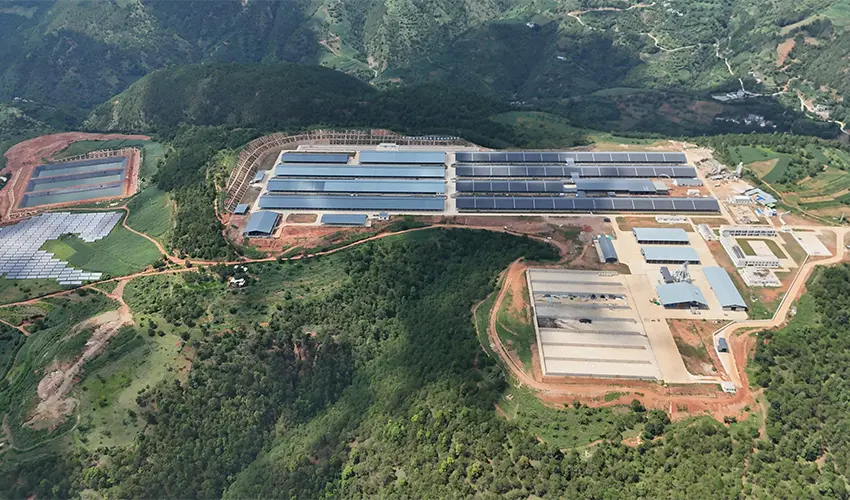
Advanced agricultural engineering determines whether a livestock farming industrial park thrives or struggles with mounting costs. Energy efficiency in farming directly affects the bottom line. Climate control systems, lighting, and automated equipment consume significant power, and poorly designed systems waste money every single day.
Waste management deserves particular attention. Modern systems convert manure into biogas for energy generation and organic fertilizer for crop production. What was once a disposal problem becomes a revenue stream. Water resource management strategies minimize consumption through recycling systems that treat and reuse water for cleaning and irrigation. Smart farm technology and automation in agriculture tie these systems together, allowing operators to monitor and adjust conditions in real time.
Sustainable engineering ensures livestock farming remains viable as environmental regulations tighten and resource costs rise. Operations designed around these principles adapt more easily to changing conditions.
Biosecurity design requires planning that prevents disease before it arrives. The layout must establish clear zones separating different operational areas. Access control determines who and what enters each zone. Ventilation systems must prevent airborne pathogen transmission between buildings.
Waste disposal protocols and animal welfare standards integrate into the overall biosecurity framework. Every entry and exit point represents a potential vulnerability. The comprehensive approach protects animal health and safeguards the entire production chain from contamination events that could halt operations for weeks.
| Engineering Solution | Key Benefits | Application |
|---|---|---|
| Waste-to-Energy Systems | Reduced emissions, energy generation | Manure treatment |
| Water Recycling | Water conservation, reduced consumption | Cleaning, irrigation |
| Smart Climate Control | Optimized animal comfort, energy savings | Housing facilities |
| Automated Feeding | Precise nutrition, reduced labor | Feed delivery systems |
| Biosecurity Infrastructure | Disease prevention, enhanced animal health | Entry/exit points, facility layout |
From-farm-to-table solutions require complete integration across the livestock industry value chain. Food safety and quality depend on traceability at every stage. Managing primary production, food processing facilities, and cold chain logistics as a unified system improves market responsiveness and contributes to global food security & safety.
Integrated design eliminates bottlenecks between production and consumption. Resources flow more efficiently, delivery times shorten, waste decreases, and product quality improves throughout the supply chain. Each connection point represents an opportunity to maintain standards or lose control.
Agrifam’s integrated solutions extend beyond the farm gate. Connecting every stage creates transparency and quality control that isolated operations cannot achieve. If you’re interested, check 《Driving Global Food Conservation Through Technological Innovation》.
Smart technology and automation are changing how livestock farming industrial park operations run day to day. Precision livestock farming uses data analytics farm management to optimize feeding schedules, health monitoring, and environmental control. The digital transformation reduces labor requirements while improving outcomes.
Modern facilities rely on advanced sensors, IoT devices, and AI-driven systems working together. These technologies collect data continuously and respond to changing conditions faster than human operators can.
IoT in agriculture enables real-time monitoring of animal health indicators and environmental conditions throughout a livestock farming industrial park. AI livestock management systems analyze incoming data to predict disease outbreaks, adjust feeding schedules based on growth patterns, and optimize breeding cycles.
Robotics farming solutions handle repetitive tasks like cleaning and feed delivery. Automation reduces human error and frees workers for tasks requiring judgment and problem-solving. The combined effect enhances both animal welfare and operational effectiveness.
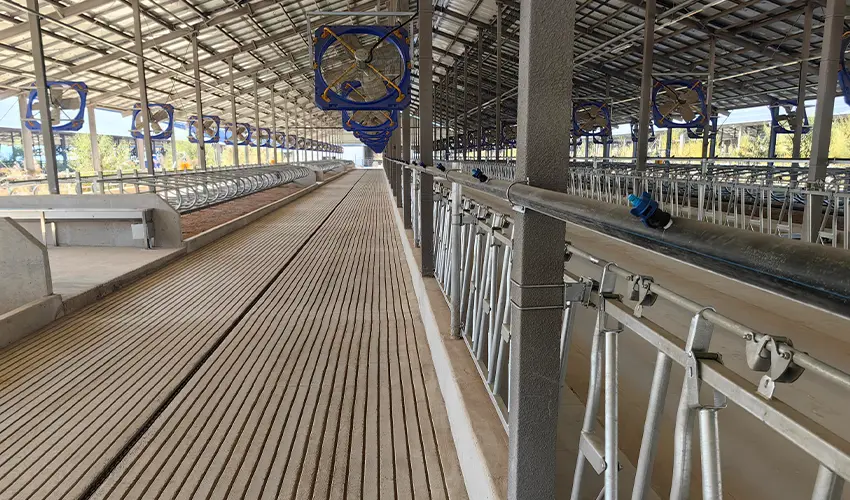
Strategic financial models for agribusiness determine whether a project moves forward or stalls in the planning phase. Consulting services agriculture guide clients through development stages where decisions have long-term consequences. Project financing farm arrangements must align with realistic timelines and revenue projections.
Agribusiness investment planning balances potential returns against genuine risks. A livestock farming industrial park requires substantial capital, and the financial structure must account for construction delays, market fluctuations, and operational ramp-up periods.
Investing in an integrated livestock farming industrial park offers financial advantages through economies of scale and reduced operational costs. Enhanced biosecurity minimizes losses from disease outbreaks. Efficient resource management lowers ongoing input costs. The integrated value chain provides greater market control and improved profit margins compared to fragmented operations.
Agrifam delivers one-stop service covering every development phase. Civil engineering agriculture establishes the physical foundation. Manufacturing farm equipment ensures systems meet specifications. Installation farm systems brings everything together on site.
The process continues from initial concept through commissioning agricultural projects and into ongoing operations. Upgrading farm infrastructure keeps facilities current as industry standards evolve. End-to-end capabilities mean clients work with a single partner rather than coordinating multiple contractors. Full-process coverage includes resourceful manure treatment and comprehensive one-stop service guarantee for broiler and egg layer poultry soultion.
Agrifam Co., Ltd. works with clients ready to develop modern, sustainable livestock farming industrial park facilities. Our team handles integrated design, engineering, and project implementation. Contact us at 010-8591 2286 or bjhn@agrifamgroup.com to discuss your project requirements.
Integrated design for a livestock farming industrial park coordinates all operational aspects simultaneously rather than treating each system as a separate problem. Animal housing, feed production, waste management, and processing facilities connect through shared infrastructure and information systems. This coordination improves biosecurity, reduces environmental impact, and optimizes resource use across the entire operation.
Environmental protection integrates into every project phase. Waste management systems convert byproducts into usable resources. Smart technologies optimize water and energy consumption. Infrastructure design minimizes carbon footprint from the start. These approaches ensure compliance with current regulations while preparing for stricter future requirements.
Agrifam provides consulting that covers project feasibility studies, financial modeling, and investment planning. We help clients structure financing arrangements appropriate for large-scale agricultural development. The goal is establishing a foundation that supports successful construction and sustainable long-term operations.






bjhn@agrifamgroup.com