EN
Setting up a bioethanol factory is not a matter of buying fermenters and distillation columns. It is the integration of grain handling, advanced bioprocessing, energy management, and by-product monetization into a single, efficient system that works profitably across market cycles. The journey moves from feedstock security and site feasibility through technology configuration, plant engineering, and circular economy design. With an integrated approach, a corn ethanol plant can cut process energy consumption by 25% and achieve full valorization of every input stream, turning corn into fuel, feed, and even food-grade outputs. This guide maps the critical stages from early assessment to sustained full-capacity operation, drawing on engineering principles and hands-on project experience in agricultural industrial chain integration.
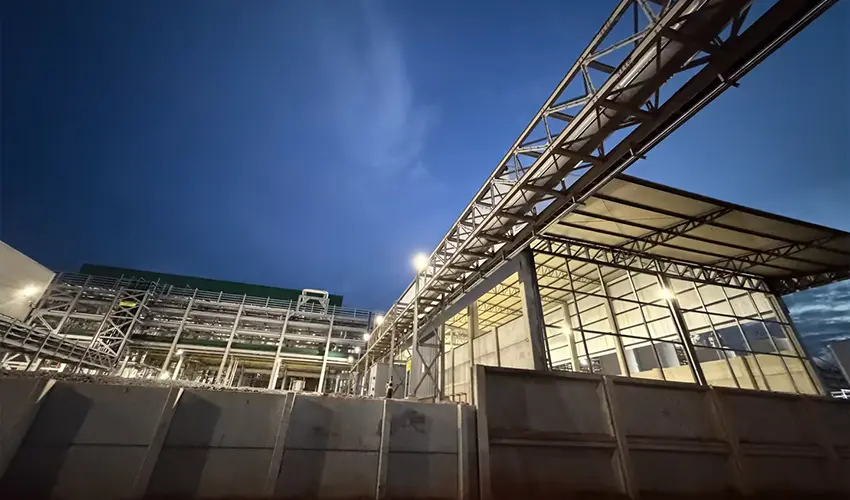
A bioethanol project begins not with fermentation technology but with corn supply logistics and site infrastructure. I have worked on distillery projects where a beautifully designed plant was never built because the surrounding grain basin could not support its capacity year-round. You must first quantify the sustainably available corn within a 200‑kilometer radius, analyze historical price volatility, and map competing buyers in the region. Corn quality—starch content, moisture, protein level—directly determines ethanol yield and DDGS protein quality, so set a clear spec with acceptable ranges before penciling in an annual capacity.
Site selection weighs transportation access against utility costs. A rail spur can reduce inbound corn freight by USD 2‑4 per tonne compared with truck-only logistics, but if the site lacks sufficient water for cooling and mash preparation, the project faces expensive water treatment or well drilling. The land must also accommodate future phases: a bioethanol plant that expects to add CO2 liquefaction or a DDGS dryer in Year 3 needs pre‑allocated space and utility tie‑ins.
| Capacity Band (tonnes/year) | Typical Land Requirement (ha) | Water Demand (m³/day) | Indicative Investment (USD M) |
|---|---|---|---|
| 50,000 – 100,000 | 5 – 8 | 800 – 1,200 | 25 – 45 |
| 100,000 – 200,000 | 8 – 12 | 1,200 – 2,000 | 45 – 80 |
| 200,000 – 400,000 | 12 – 20 | 2,000 – 3,500 | 80 – 150 |
Ranges reflect typical Chinese plain basin conditions; local utility costs and feedstock basis will shift numbers materially.
The core transformation of corn into anhydrous ethanol follows a sequence that has been refined over decades but still leaves room for significant efficiency gains when the unit operations are tightly integrated. Grain received from trucks or rail passes through rotary screens and magnetic separators to remove foreign material, then moves to hammer mills or roller mills. Mill choice is not generic: hammer mills produce a finer flour that improves enzyme access during liquefaction but consume more electricity, while roller mills offer lower energy use per tonne at the cost of a more complex maintenance profile. I have seen plants where switching mill type and adjusting sieve gap brought a 4% yield increase per bushel of corn with no other process changes.
Liquefaction and saccharification convert starch into fermentable sugars using thermostable α‑amylase and glucoamylase enzymes. The critical parameters here are temperature ramping, pH control, and calcium ion concentration, which stabilize the α‑amylase. Under‑optimized liquefaction leaves residual starch that never becomes ethanol, reducing both alcohol yield and DDGS protein concentration. Continuous fermentation then converts the glucose‑rich mash using Saccharomyces cerevisiae in a cascade of fermenters, typically achieving ethanol concentrations of 12‑14% v/v before distillation. The spent whole stillage exits the bottom of the beer column and heads toward the DDGS drying circuit—a revenue stream we will examine shortly.
Distillation and dehydration deliver the final product. A multi‑column system—beer column, rectifier, and stripper—raises ethanol to approximately 95% v/v, followed by molecular sieve adsorption that breaks the azeotrope and produces 99.5%+ anhydrous ethanol. The specific configuration depends on the ethanol grade required: fuel ethanol plants can operate with a slightly lower rectifier purity than food‑grade or medical alcohol lines, which changes the column tray count and reboiler duty. If the project envisions producing multiple ethanol grades, the distillation design must handle product changeover without long transitions or purity drift.
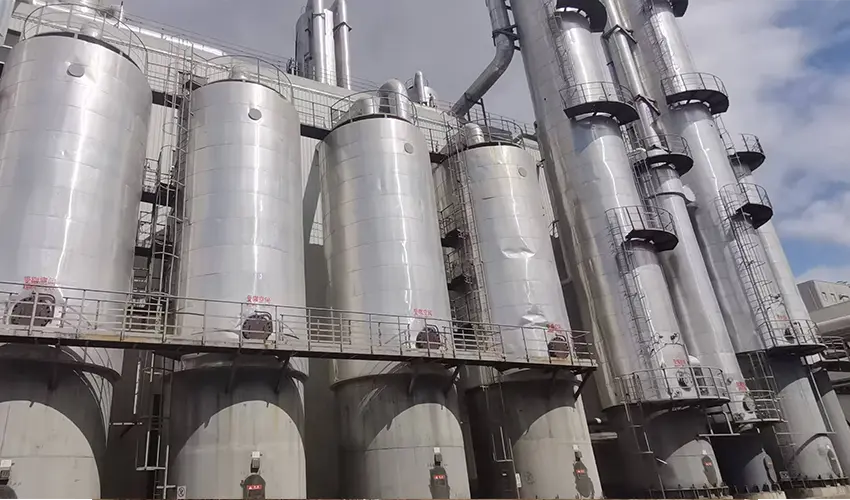
A well‑engineered corn ethanol plant does not waste heat. The cooking, distillation, and DDGS drying stages all require thermal energy, and the difference between a plant at break‑even and a plant with strong margins often lies in how steam is cascaded across temperature levels. Mechanical vapor recompression on the evaporators, vapor reuse from DDGS dryers, and regenerative heat exchange on the distillation columns can cut total steam consumption by 20‑25% compared with a plant designed without energy integration. This is not a theoretical claim—AGRIFAM’s reference alcohol solution applies energy cascade utilization and wastewater‑to‑biogas systems as standard design features, not afterthoughts.
Water management is equally material. A 200,000‑tonne plant can consume over 600,000 m³ of water annually unless closed‑loop cooling and treated process water recycling are engineered from day one. Anaerobic digestion of thin stillage produces biogas that can fire a boiler or a combined heat and power unit, offsetting purchased natural gas and converting a treatment cost into an energy asset. The biogas system size must be matched to the organic load; undersizing leads to flare‑only mode with zero energy recovery, while oversizing wastes capital.
Translating a process flow diagram into a functioning plant requires detailed mechanical engineering, procurement planning, and construction management. Tanks, columns, heat exchangers, and conveyors must be specified for corrosion resistance, thermal cycling, and the occasional upset condition. Distillation columns operating at high temperature and ethanol concentration require stainless steel internals, while grain handling equipment demands abrasion‑resistant liners. Procurement lead times for long‑lead items like molecular sieve vessels and steam turbines can stretch beyond 12 months, so ordering must start early to avoid pushing back startup dates.
Construction sequencing is as important as equipment choice. I have observed projects where the fermentation building went up before the foundation for the distillation column was poured, forcing later rigging operations through narrow access lanes. A logical build flow starts with civil works for heavy equipment, then tank farm erection, then steel structure for processing buildings, and finally piping and electrical tie‑ins. Commissioning follows a stepwise path: water runs, then sugar‑water trials with enzyme and yeast activity tests, then grain‑in runs under increasing load. The plant should not declare commercial operation until it has run at 100% capacity for 30 consecutive days with stable quality metrics.
A corn ethanol plant that sells only ethanol is leaving roughly 30‑40% of potential revenue on the table. DDGS (distiller’s dried grains with solubles) is the single largest co‑product by volume and can contribute 15‑25% of total plant revenue depending on protein content, color, and local feed market dynamics. Golden, low‑fiber DDGS with protein above 28% commands a premium in dairy and swine rations. Achieving that quality demands careful control of drying temperature and residence time—excess heat darkens the product and reduces lysine availability, lowering its nutritional and market value.
CO₂ from fermentation is a second high‑potential stream. A 200,000‑tonne ethanol plant can produce approximately 150,000 tonnes of CO₂ per year. Capturing, scrubbing, and liquefying that stream for food‑grade or industrial use transforms a vented gas into a product worth USD 30‑60 per tonne, creating a new business line that can improve overall project IRR by 2‑4 percentage points. The integration point is straightforward: a CO₂ recovery unit installed after the fermentation scrubber, with liquefaction and storage tanks sized for truck loading.
Once the plant is running at capacity, the focus shifts to stability, regulatory compliance, and incremental improvement. Corn moisture and starch content vary with growing season, so the process control system must adjust enzyme dosage and fermenter residence time dynamically. Fuel ethanol specifications under ASTM D4806 or EN 15376 leave narrow bands for water content, acidity, and sulfur, and any excursion can block a shipment or require costly reprocessing. A DCS with real‑time trending and alarm rationalization helps operators catch deviations before they become off‑spec batches.
Permit renewal and environmental reporting run on fixed cycles, and the plant must maintain baseline water quality monitoring, air emission records, and waste management logs. Proactive engagement with the local environmental bureau and nearby communities prevents the kind of surprise shutdown that can cost a plant hundreds of thousands of dollars in lost production. From there, the plant’s long‑term value grows through debottlenecking studies, adding product grades, and expanding by‑product processing—turning a fuel ethanol facility into a multi‑output integrated biorefinery.
A bioethanol factory setup succeeds not because one piece of equipment is superior, but because the entire chain—from corn sourcing through energy integration and co‑product marketing—has been designed as a single, optimized system. That requires an engineering partner who understands grain processing, fermentation, distillation, and the downstream agricultural markets that absorb DDGS and CO₂. AGRIFAM provides complete EPC services for grain‑based alcohol and fuel ethanol production, including plant design, equipment supply, installation, commissioning, and ongoing process support. To discuss your project scope, share your planned location and target annual capacity with our engineering team at bjhn@agrifamgroup.com or call 010‑8591 2286 for a preliminary technical and economic assessment.
A typical corn ethanol plant with 100,000–200,000‑tonne capacity requires 24–36 months from final investment decision to commercial operation, assuming permits are in place. The first 6–8 months cover detailed engineering and long‑lead equipment procurement; civil works and steel erection take another 8–10 months; equipment installation, piping, and electrical work run 6–8 months; commissioning and performance testing consume the final 3–4 months. Any delay in securing the environmental impact assessment or construction permit will push the timeline out proportionally.
A greenfield 100,000‑tonne‑per‑year corn ethanol plant in an Asian baseline location typically requires USD 40–55 million in total capital, including civil works, process equipment, utilities, automation, and project management. This range can shift by ±20% depending on site conditions, local labor rates, and the inclusion of optional units like CO₂ liquefaction or large‑scale biogas upgrading. The investment is front‑loaded, but integrated by‑product streams can accelerate payback to 4–6 years in favorable corn and energy price environments.
Yes, but the distillation and dehydration systems must be designed for multi‑grade operation from the start. Fuel ethanol requires anhydrous product with denaturant addition, while food‑grade neutral spirit demands higher rectification purity, lower levels of congeners, and dedicated product storage with traceability records. Adding food‑grade capability typically increases the distillation column cost by 15–25% and requires a separate loading area to prevent cross‑contamination. It is far more expensive to retrofit later.
At minimum, a bioethanol plant requires an Environmental Impact Assessment (EIA) approval, a construction permit, a wastewater discharge permit, and an air emission permit covering boiler stack and DDGS dryer exhaust. In many jurisdictions, the EIA must also address noise impact, solid waste management plans, and emergency response procedures for ethanol storage. The EIA approval process alone can take 10–18 months, so initiating it early—even during feasibility—is essential to avoid project delays.
DDGS and CO₂ can shorten the payback period by 2–3 years compared with a plant that sells only ethanol. DDGS alone often offsets 20–30% of corn cost, while food‑grade CO₂ adds a stable industrial gas revenue line that is less correlated with fuel prices. The combined effect is a more resilient financial model that maintains positive cash flow even when ethanol margins compress. For a detailed financial model tailored to your feedstock costs and local by‑product market prices, contact our engineers at bjhn@agrifamgroup.com.
If you’re interested, check out these related articles:
Driving Global Food Conservation Through Technological Innovation







bjhn@agrifamgroup.com