EN
Getting pig farm engineering right means understanding that every square meter of barn space either contributes to or detracts from your bottom line. The layout decisions made during planning—where sows farrow, how nursery pigs transition, what airflow patterns develop in finishing barns—these choices compound over years of production cycles. I’ve seen operations where small design oversights created persistent problems that owners simply learned to work around, never realizing the cumulative cost. The goal here is straightforward: create environments where pigs thrive at each growth stage while keeping labor manageable and inputs efficient.
The breeding herd sets the pace for everything downstream. A sow farm layout that restricts movement or creates stress points during critical periods—breeding, gestation, farrowing—will show up in conception rates and litter sizes long before anyone connects the dots back to facility design.
Modern sow farm design balances several competing demands. Sows need enough space to express natural behaviors, particularly in group housing systems that have become standard in many markets. At the same time, the facility must allow workers to move animals efficiently, monitor health status, and intervene when problems arise. Automated feeding systems deliver precise rations to individual sows based on body condition and reproductive stage, which matters because overfeeding gestating sows creates as many problems as underfeeding.
Farrowing areas require careful attention to flooring, temperature gradients, and piglet protection. The sow needs a cooler zone while piglets require supplemental heat—typically 32-35°C in the creep area during the first week. Farrowing crate dimensions have evolved based on sow size data, and getting this wrong means either restricted sow movement or increased piglet crushing risk.
Climate control in sow facilities often gets less attention than it deserves. Breeding performance drops when temperatures exceed 25°C for extended periods, and the ventilation system must handle seasonal extremes without creating drafts at animal level. Biosecurity protocols start at the perimeter but extend through every aspect of pig farm engineering, from air filtration to personnel movement patterns.
The three weeks following weaning represent the highest-risk period in a pig’s life. Nursery barn engineering focuses on managing this transition, where piglets move from a controlled farrowing environment and maternal immunity to independent feeding and new social groups.
Temperature control in nursery facilities demands precision. Newly weaned pigs need ambient temperatures around 28-30°C, dropping gradually as they grow. The challenge is maintaining this warmth while providing adequate ventilation—young pigs produce moisture and ammonia that must be removed, but cold air infiltration causes huddling and reduced feed intake.
Ventilation systems in pig barns serving nursery populations typically use minimum ventilation rates during cold weather, with staged increases as pigs grow and outdoor temperatures rise. The system must respond to actual conditions rather than fixed schedules, which is where environmental controllers earn their investment.
Floor design affects both pig comfort and disease transmission. Fully slatted floors simplify manure removal but can create foot and leg problems if slot widths aren’t matched to pig size. Partially slatted systems with solid lying areas give pigs behavioral choices but require more attention to cleaning protocols.
Nursery pig health depends heavily on water quality and availability. Nipple drinker height and flow rates need adjustment as pigs grow, and water medication systems must deliver accurate concentrations. These details seem minor until a disease challenge reveals gaps in the system.
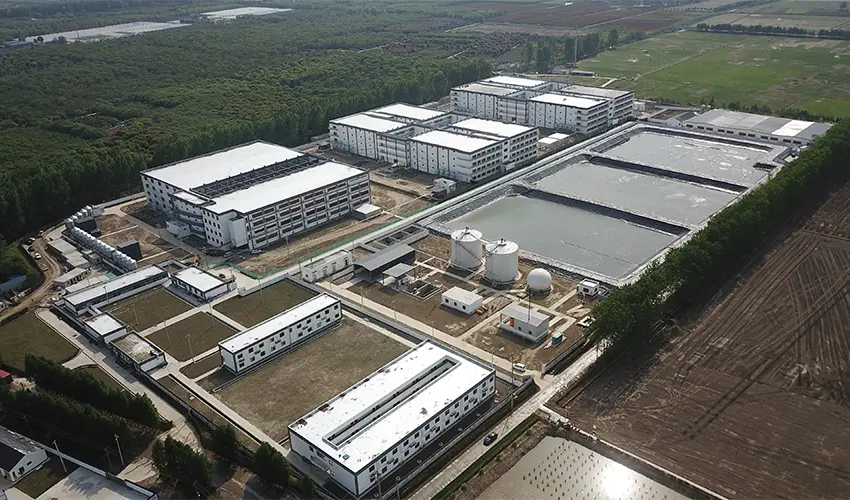
The grow-finish phase consumes the majority of feed inputs, making efficiency gains here particularly valuable. Finishing barn design influences feed conversion ratios through environmental comfort, feeder access, and stress reduction.
Pigs in the finishing phase generate substantial heat—a 100 kg pig produces roughly 200 watts of sensible heat. Summer ventilation systems must move enough air to prevent heat stress, which causes reduced feed intake and slower growth. Tunnel ventilation with evaporative cooling pads has become standard in warm climates, though the system requires careful management to avoid humidity problems.
Feeder space allocation directly affects growth uniformity within pens. Restricted feeder access creates competition that benefits aggressive pigs while penalizing timid ones, resulting in variable market weights. The ratio of pigs to feeder spaces depends on feeder design—wet/dry feeders allow higher pig-to-space ratios than dry feeders because pigs spend less time at each feeding event.
Pen layout in finishing barns affects labor efficiency during sorting and loading. Facilities designed with animal movement patterns in mind—using solid panels to guide pigs rather than relying on handlers—reduce stress and loading time. This matters most during market weeks when multiple loads leave the facility.
Precision livestock farming technologies are increasingly common in finishing operations. Weight estimation cameras, feeding behavior monitors, and environmental sensors generate data that can identify health problems early or optimize marketing decisions. The value depends on having systems in place to act on the information.
Ventilation and climate control represent ongoing operating costs that pig farm engineering can minimize through thoughtful design. The principles apply across sow, nursery, and finishing facilities, though the specific requirements differ.
Minimum ventilation removes moisture and maintains air quality during cold weather when heat conservation matters. Maximum ventilation provides cooling during warm periods. The transition between these modes—and the staging of fans and inlets—determines both energy consumption and environmental consistency.
Heating systems in farrowing and nursery facilities typically use radiant heat sources positioned over piglet rest areas, supplemented by space heating when ambient temperatures drop. Heat lamps remain common, though heat mats and radiant tube heaters offer efficiency advantages in some configurations.
Cooling options beyond ventilation include drip cooling for sows, evaporative pads for incoming air, and in some climates, earth tubes that pre-condition ventilation air. The appropriate choice depends on local humidity patterns and the specific production stage being served.
Air quality management extends beyond temperature to include ammonia, hydrogen sulfide, and dust levels. Manure handling frequency, pit ventilation, and air filtration all contribute to the air environment pigs experience. Research consistently shows that poor air quality depresses growth rates and increases respiratory disease susceptibility.
Manure handling represents both a cost center and a potential resource stream. Modern pig farm engineering approaches waste management as an integrated system rather than an afterthought.
Pit storage under slatted floors remains the most common approach in confinement facilities, with periodic pump-out for land application. Storage capacity determines how often fields must be available for application, which affects cropping flexibility. Covered storage reduces odor and captures nutrients that would otherwise volatilize.
Anaerobic digestion converts manure into biogas—primarily methane—that can generate electricity or heat. The economics depend on herd size, energy costs, and available incentives. Digesters also produce a stabilized effluent with reduced odor and pathogen levels, which can simplify land application logistics.
Solid-liquid separation creates distinct waste streams with different handling characteristics. Solids can be composted or exported from the farm, while liquids require less storage volume and are easier to pump and apply. This approach makes particular sense when land application area is limited relative to herd size.
Nutrient management planning matches manure application to crop uptake, preventing accumulation in soils and protecting water quality. Regulations vary by jurisdiction, but the underlying principle—applying nutrients at agronomic rates—represents sound practice regardless of regulatory requirements.
Pig farm engineering projects succeed when design decisions account for construction realities and long-term operational needs. The facility that looks optimal on paper may create problems if it can’t be built efficiently or maintained practically.
Site selection affects construction costs, utility access, and neighbor relations. Soil conditions determine foundation requirements. Prevailing winds influence building orientation and the location of manure storage relative to residences. These factors constrain design options in ways that become apparent only through site-specific analysis.
Modular construction approaches can reduce timeline and cost for certain facility types, particularly when multiple similar buildings are planned. Standardized components allow factory fabrication with field assembly, though this requires early commitment to specific designs.
Equipment selection involves tradeoffs between initial cost, operating efficiency, and maintenance requirements. Automated systems reduce labor but add complexity. The right balance depends on local labor availability, technical support access, and management capacity.
Commissioning—the process of verifying that installed systems perform as designed—often receives insufficient attention. Ventilation controllers need calibration. Feeding systems require adjustment for specific diets. Taking time during startup to optimize settings prevents months of suboptimal performance.
Agrifam Co., Ltd. approaches pig farm engineering through integrated solutions that span financial planning, facility design, construction, equipment installation, and operational support. This continuity from concept through commissioning ensures that design intent translates into actual performance. For perspectives on how technology advances agricultural efficiency more broadly, 《Driving Global Food Conservation Through Technological Innovation》 offers relevant context.
Agrifam Co., Ltd. provides comprehensive pig farm engineering services covering financial guidance, consulting, design, civil engineering, manufacturing, installation, and ongoing technical support. Our integrated approach ensures facilities perform as intended from day one. Contact us at 010-8591 2286 or bjhn@agrifamgroup.com to discuss your production goals and site conditions.
Effective biosecurity starts with site layout. Separate clean and dirty zones with physical barriers and designated crossing points where personnel change clothing and footwear. Design vehicle routes so delivery trucks never enter production areas—loadout facilities should allow pig movement without external vehicles crossing the perimeter. Air filtration systems, while adding cost, have proven effective at preventing airborne pathogen entry in high-health herds. The investment in biosecurity infrastructure typically costs less than a single disease break.
The impact is substantial and measurable. Finishing pigs housed above their thermal comfort zone—roughly 18-22°C depending on weight—reduce feed intake by approximately 1-2% for each degree above the upper threshold. This translates directly to slower growth and extended days to market. In nursery pigs, temperature drops below the comfort zone increase maintenance energy requirements, diverting calories from growth. Facilities with precise climate control consistently outperform those with marginal systems, often by 5-10% in feed efficiency.
Feeding systems typically offer the fastest payback. Automated sow feeding in group housing ensures each animal receives her specific ration regardless of social hierarchy, improving body condition uniformity and reproductive performance. In finishing barns, automated feeding with growth monitoring can adjust diets based on actual performance rather than fixed schedules. Environmental control automation—responding to real conditions rather than timers—reduces energy waste while maintaining better conditions. Labor savings matter, but the performance improvements often exceed the labor cost reduction.
Scale affects economics, but smaller operations can still benefit from sustainable approaches. Covered manure storage reduces odor complaints and nutrient losses even without biogas capture. Solar installations have reached price points where they compete with grid power in many locations, regardless of farm size. Water recycling from cooling systems or wash water reduces well pumping costs. The key is matching technology complexity to management capacity—simpler systems that actually get maintained outperform sophisticated systems that don’t.
Agrifam’s model covers the full project lifecycle. Financial planning helps structure investments appropriately. Design services translate production goals into facility specifications. Civil engineering and construction management ensure buildings meet specifications. Equipment manufacturing and installation provide integrated systems rather than assembled components. Commissioning verifies performance before handover. Ongoing support addresses operational questions and system upgrades as needs evolve. This continuity eliminates the gaps that occur when multiple vendors handle separate project phases.







bjhn@agrifamgroup.com