EN
Medical alcohol production is not merely about achieving a high ethanol concentration. It is a regulatory manufacturing activity governed by Good Manufacturing Practice (GMP) standards and clean room requirements that intersect every process stage, from raw grain intake to final sterile filling. Over the past fifteen years, I have seen pharmaceutical alcohol projects either struggle with retrofit costs or flourish because the facility was conceived as an integrated GMP ecosystem from day one. This article addresses the full system integration of GMP manufacturing into a grain-to-alcohol production chain, covering the interplay between clean room classification, process validation, and the value of byproduct utilization in creating a compliant, efficient, and sustainable medical alcohol plant.
GMP for medical alcohol is not a single certificate. It is a fabric of interrelated quality obligations: validated processes, controlled environments, documented procedures, and traceable supply chains. In pharmaceutical excipient ethanol, these obligations flow from frameworks such as the FDA’s 21 CFR Part 211 for finished pharmaceuticals, EU GMP Annex 1 for sterile manufacturing, and the ICH Q7 guideline for active pharmaceutical ingredients where the alcohol acts as a raw material. At the plant level, three demands dominate.
First, environmental control extends beyond the final purification suite. The product is a volatile, hygroscopic liquid that must be protected from microbial ingress and particulate contamination throughout the downstream process. Second, every unit operation that touches the alcohol post-distillation, from buffer tanks to filling lines, must be validated to produce consistent purity, with microbial and endotoxin levels within compendial limits. Third, documentation must prove that the validated state was maintained for every batch. A failure in any one of these three areas disqualifies the product from pharmaceutical distribution.
ISO 14644 clean room classifications are often cited as the starting point, but I have found that plant teams gain more traction when they think in terms of contamination risk zones. The alcohol emerging from a multi-column distillation unit is already at 95% to 96.4% ethanol and is inherently hostile to microbial growth. The risk shifts to the surfaces, valves, sight glasses, and connections between the distillation outlet and the final container. Mapping these risk zones to ISO Class 8 or Class 7 environments, with local Class 5 unidirectional airflow at filling points, creates a technically sound and cost-controllable clean room envelope.
The architectural instinct is to place a clean room at the end of the production line. In an alcohol plant, that approach generates a bottleneck: the distillation skid discharges hundreds of liters per hour into a receiving vessel that must be positioned, connected, and vented inside the controlled zone. A more integrated approach, and the one I recommend to project teams, is to design the clean room boundary to enclose the final purification steps: the product cooler, the surge tank, the fine filtration train, and the filling station. This eliminates pipe runs that cross from an uncontrolled area into a classified space.
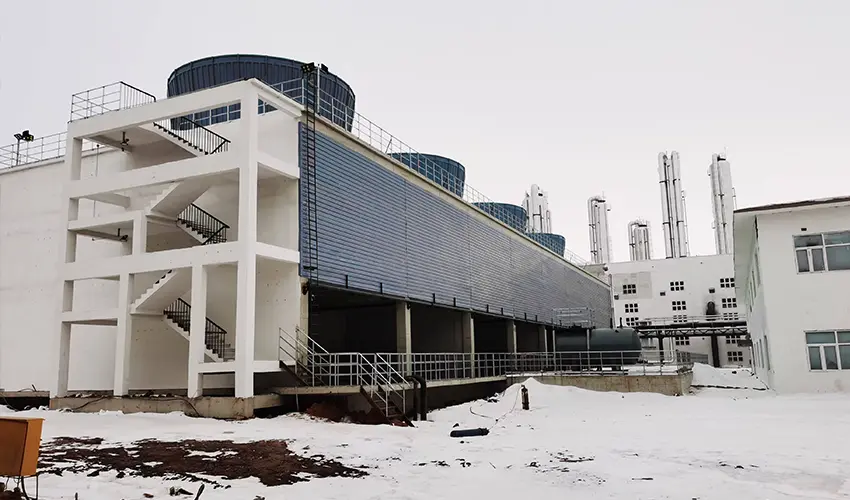
A typical medical alcohol GMP facility will require a dedicated air handling system with HEPA terminal filtration, pressure cascading, and defined gowning protocols. Material and personnel flows must be segregated, with pass-throughs for sanitized equipment, dedicated sampling ports outside the clean zone for in-process testing, and a CIP (clean-in-place) system that can sanitize the entire post-distillation path without dismantling. In one project we designed, the filling suite was arranged so that the filling machine could be retracted into a biosafety-grade isolator, removing the need for full room classification upgrades during sterile filling campaigns while still meeting Annex 1 intent for the highest-risk operation.
The following table outlines typical clean room requirements mapped to medical alcohol process zones.
| Process Zone | Typical ISO Class | Key Controls |
|---|---|---|
| Distillation and rectification | Unclassified (controlled) | Closed system, positive pressure gauges, condensate integrity testing |
| Buffer tank and transfer | ISO 8 | HEPA-filtered air, pressure differentials, automatic valve sequences |
| Final filtration and surge tank | ISO 7 | Gowning, temperature and humidity monitoring, surface disinfection logs |
| Aseptic filling | ISO 5 (local) | Unidirectional airflow, isolator or RABS, continuous viable monitoring |
This zoning does not treat clean rooms as add-ons. It aligns the physical environment with the process steps that genuinely protect product quality, and it avoids the trap of over-classifying areas that operate under closed, pressurized conditions.
GMP requires that every process capable of causing variation be validated. For medical alcohol, this starts earlier than many pharmaceutical professionals expect: with the corn grinding and mashing stages upstream of fermentation. The reason is that residual oils and aldehydes from suboptimal grinding or prolonged fermentation can persist through the rectification columns and emerge as impurity peaks in the final ethanol, complicating compliance with USP monograph limits for methanol, acetaldehyde, and fusel oils.
The validation master plan for a new medical alcohol line typically includes three phases. Installation qualification (IQ) verifies that all vessels, transfer lines, instrumentation, and automation logic match the design specifications and are constructed from 316L stainless steel with documented passivation. Operational qualification (OQ) confirms that the distillation column can separate ethanol to 95% minimum purity under normal and challenge conditions, that the molecular sieve dehydration unit (if producing anhydrous medical alcohol) reduces water to less than 0.5%, and that clean-in-place cycles achieve the required sterility assurance levels. Performance qualification (PQ) is conducted across three consecutive production batches where every data point from fermentation temperature profiles to storage tank bioburden is collected and compared to pre-defined acceptance criteria.
Chen Guoqiang’s teams have documented that validation failures in alcohol plants most often trace back to two root causes: inconsistent steam quality that affects column reflux ratios and the inability to maintain microbial control in the yeast propagation system when the plant operates in batch-continuous mode. Addressing these requires not just tighter automation but a rethinking of the water and steam management systems as part of the GMP boundary.
A medical alcohol facility without a quality control framework is a commodity distillery. The quality unit must have independent authority over batch release, and the testing laboratory must be equipped for the specific chemistry of pharmaceutical ethanol: gas chromatography for volatile impurities, Karl Fischer titration for water content, membrane filtration for microbial enumeration, and LAL-based endotoxin testing for the injectable-grade product.
But the heavier burden is the batch record system. Each batch of medical alcohol must have a complete build of records: raw material certificates for the incoming corn or grain, cleaning logs for all post-distillation equipment, in-process test results for refractive index and pH at the rectifier outlet, and deviations reports if any critical process parameter moved outside the validated range. In plants I have worked on, the batch record is not a retrospective compilation. It is a paperless system driven by the DCS that timestamp-locks each process event and requires operator electronic signature at defined checkpoints. This design not only satisfies FDA audit trail requirements but also reduces batch review cycle time from days to hours.
The lab and batch record architecture must also anticipate future scope: if the facility intends to produce electronic-grade anhydrous ethanol later, the impurity detection limits and clean room classifications will require higher resolution. Building this scalability into the initial quality system design avoids costly revalidation down the line.
Medical alcohol is rarely produced in a standalone, single-purpose plant. The economic reality is that most producers operate within a broader grain deep processing facility that may also output fuel ethanol, corn starch, DDGS protein feed, and food-grade CO2. The strategic question is whether to treat GMP production as a segregated island or to weave it into the existing infrastructure. My recommendation, after evaluating multiple feasibility studies, is the latter: integration yields capital savings of approximately 20% compared to a greenfield medical-only plant, because the shared steam, water, grain receiving, and wastewater treatment systems can be leveraged.
AGRIFAM’s approach with its alcohol EPC solutions has been to design a common upstream (grain preparation, fermentation) that feeds both a fuel-grade distillation train and a high-purity medical alcohol train. The split occurs at the rectification stage, where the pharmaceutical stream is further purified and piped into a dedicated GMP bay with separate product handling. This configuration allows the plant to shift output volumes between fuel and medical grades based on market demand without compromising the validated state of the medical section, a flexibility that commodity-level facilities cannot replicate.
Moreover, integrating medical alcohol into a circular economy model strengthens the sustainability narrative that pharmaceutical buyers increasingly scrutinize. In an integrated facility, the stillage from the medical alcohol line still produces DDGS for animal feed, and the CO2 released during fermentation can be captured, purified to food grade, and sold. The clean room and validation systems add operating costs, but the byproduct revenue streams offset a significant portion, often reducing the net marginal cost of medical alcohol production.
It depends on the final product claim and the pharmacopoeia monograph. For topical medical alcohol (e.g., 70% ethanol for disinfection), ISO 8 clean room conditions for the filling area are generally expected, though some markets accept validated closed-system filling without full classification. For injectable-grade anhydrous ethanol used as an excipient, clean room conditions consistent with ISO 5 for aseptic filling are non-negotiable. In all cases, the justification must be documented in the site quality manual and accepted by the relevant regulatory authority before commercial production begins. In practice, designing for ISO 7 with local ISO 5 protection provides the most future-proof baseline for multi-grade facilities.
In projects I have overseen, the validation timeline from completion of mechanical installation to first commercial batch release typically runs between 14 and 22 weeks for a greenfield GMP line, assuming the quality systems and standard operating procedures were drafted during construction. Retrofitting an existing alcohol plant for medical-grade compliance can extend to 10 to 14 months because piping modifications, clean room construction, and documentation gap-filling occur concurrently with continued fuel production. The single variable that most affects this timeline is the availability of qualified water. If a new purified water generation and distribution loop must be installed along with the clean room, the commissioning and validation sequence becomes sequential rather than parallel.
There is no regulatory minimum batch size, but the economic threshold is driven by the fixed costs of quality control testing, clean room maintenance, and batch record management. From an operational perspective, the border lies around 1,500 to 2,000 liters per batch for dedicated medical alcohol production. Below that, the per-liter QC cost (GC analysis, endotoxin, microbial limits) climbs sharply. However, in integrated plants that share fermentation capacity with fuel ethanol production, smaller dedicated medical alcohol batches of 500 to 800 liters can be viable because the shared upstream amortizes overhead. The batch size selection should be modeled during the feasibility study and aligned with the target market segment, be it hospital disinfectant supply or pharmaceutical excipient distribution.
Yes, and I have seen this configuration work effectively when the design maintains strict physical segregation of the post-distillation product paths and dedicates separate tank farms, transfer pumps, and filling lines to the medical stream. The main risk is cross-contamination through shared utilities, especially the steam condensate return system and the CIP fluid circuit. The mitigation is to equip the medical alcohol section with its own clean steam generator and a segregated CIP skid. Regulatory inspectors will focus heavily on these interfaces during pre-approval inspections, so the engineering design documents must clearly demonstrate that no common piping exists downstream of the diversion point. For a facility already producing fuel ethanol, adding a medical alcohol line requires a capital investment proportionate to a new mini-plant but unlocks a higher-margin revenue stream.
The pathway depends on the destination market. For the US, a medical alcohol manufacturer must register with the FDA as a drug establishment and list the product, submit a Drug Master File (DMF) if the alcohol is intended as an excipient for other drug products, and comply with GMP requirements under 21 CFR 211. An FDA pre-approval inspection may be triggered if the alcohol is referenced in a new drug application. For the European market, a manufacturing authorization from the competent national authority is required, and the facility must pass a GMP inspection. Most Asian markets follow similar paths based on WHO GMP standards. In all cases, engaging a regulatory consultant early in the facility design phase is recommended to ensure that layout, material specifications, and qualification protocols will satisfy the target authority. If your project involves a multi-grade facility with multiple regulatory destinations, we can review your specification matrix and confirm the clean room and documentation framework that will meet all applicable standards. Share your intended product grades and target markets at bjhn@agrifamgroup.com or call 010-8591 2286.
If you’re interested, check out these related articles:
Driving Global Food Conservation Through Technological Innovation







bjhn@agrifamgroup.com