EN
Building a feed mill from scratch involves countless moving parts, and I’ve seen projects stall for months because the engineering team wasn’t talking to the procurement people, or because commissioning got treated as an afterthought. The turnkey EPC model exists precisely to prevent that fragmentation. When one contractor owns the entire process from initial drawings through to the first ton of finished feed, accountability becomes clear and timelines become real. For operations across China looking to scale animal feed production without the coordination headaches, this integrated approach has become the default path forward.
Turnkey EPC in feed mill construction isn’t just a contract structure. It’s a philosophy of unified responsibility. A single contractor handles detailed engineering, equipment procurement, construction, and final commissioning as one continuous workflow rather than a series of handoffs between disconnected parties.
This matters because feed mills are complex systems where decisions made during design directly affect construction feasibility and operational performance years later. When the same team owns all phases, they design with buildability in mind and procure with commissioning requirements already factored in.
The practical benefits show up in three areas. Project risks concentrate with the contractor rather than fragmenting across multiple vendors. Cost predictability improves because scope gaps between contracts disappear. Timelines compress when there’s no waiting for one party to finish before another can start. For sophisticated feed processing plant development, this coordination advantage compounds at every stage.
Feed mill project management under the EPC model means each phase receives meticulous coordination. The engineering team knows what equipment is available and what the construction crew can actually install. The procurement team understands the commissioning requirements. Nothing gets designed in isolation.
Feed mill design and engineering decisions made in the first few months determine operational costs for the next two decades. Getting the plant layout right means raw materials flow efficiently from intake to finished product without unnecessary handling or bottlenecks. Getting it wrong means paying for that inefficiency every single day the facility operates.
Custom solutions matter here because no two feed mills face identical constraints. Site topography, available utilities, local raw material characteristics, target species, and production volumes all shape what the optimal design looks like. A layout that works brilliantly for a 20-ton-per-hour poultry feed operation may be entirely wrong for a 50-ton-per-hour aquaculture facility.
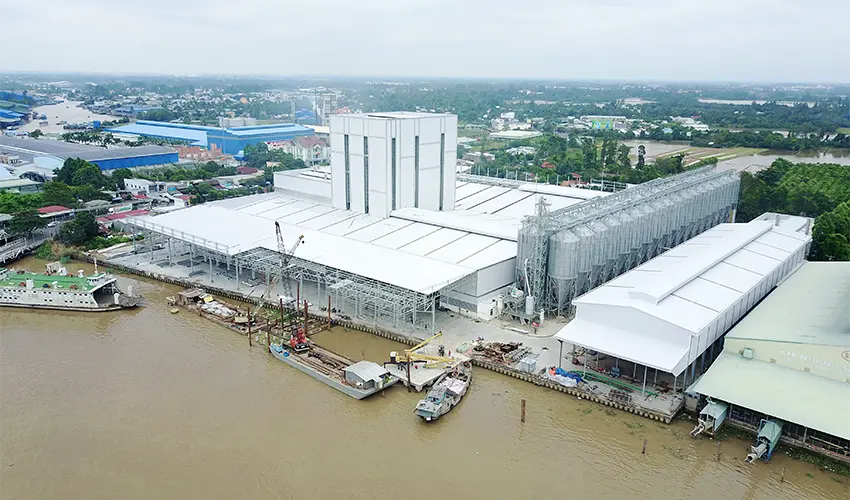
Process flow design integrates with automation in feed mills to reduce labor requirements while improving consistency. Modern systems can manage batching, mixing, pelleting, and packaging with minimal human intervention, but only if the physical layout supports that automation. Retrofitting automation into a poorly designed plant costs far more than building it in from the start.
Energy efficiency in feed mills has moved from a nice-to-have to a competitive necessity. Grinding and pelleting consume substantial power, and facilities that optimize motor sizing, heat recovery, and process sequencing see meaningful reductions in operating costs. Sustainable practices aren’t just about environmental responsibility. They directly affect profitability.
The execution phase of a feed mill EPC project is where planning meets reality. Feed mill procurement involves sourcing equipment that meets specifications while navigating lead times, quality variations, and logistics challenges. Construction requires coordinating civil works, structural steel, mechanical installation, and electrical systems on a timeline that keeps everything moving forward.
Quality control standards during this phase prevent problems that would be expensive to fix later. Every piece of equipment gets verified against specifications before installation. Welding, concrete work, and electrical connections all face inspection protocols. Regulatory compliance with both international standards and local Chinese requirements gets built into the process rather than addressed as an afterthought.
Project timeline management keeps the critical path visible and addresses delays before they cascade. Equipment arriving late, weather disruptions, or permitting issues all require rapid response to maintain schedule integrity. The goal is minimizing delays and cost overruns through proactive management rather than reactive firefighting.
Feed mill commissioning is where everything comes together or falls apart. Expert commissioning ensures all integrated systems work as a unified whole. Raw material intake, grinding, mixing, conditioning, pelleting, cooling, screening, and packaging must all operate cohesively. Each system needs calibration to meet specified output parameters for capacity, pellet quality, and energy consumption.
This verification process catches issues while the contractor is still on site and responsible for corrections. Skipping thorough commissioning means discovering problems during commercial production when the costs are highest and the pressure is greatest.
Expert commissioning ensures all integrated systems, from raw material intake to finished feed output, are calibrated and optimized for peak efficiency, safety, and product quality. The process involves systematic testing of every subsystem, verification of control logic, and fine-tuning of process parameters.
Without proper commissioning, a feed mill might technically operate but never reach its design capacity or quality specifications. Motors might run inefficiently, pellet durability might suffer, or batch accuracy might drift. Commissioning mitigates these potential operational issues and validates that the facility meets all design specifications and regulatory requirements before the contractor’s responsibility ends.
The typical costs for a turnkey feed mill project in China vary significantly based on capacity, technology integration, and customization requirements. A small facility producing 5 tons per hour involves fundamentally different investment levels than a large-scale operation producing 30 or 50 tons per hour.
Major cost components include engineering design, equipment manufacturing, civil construction, installation, and commissioning. Equipment typically represents the largest single category, with grinding, pelleting, and automation systems commanding premium prices. Civil construction costs depend heavily on site conditions and local labor rates.
Transparent cost breakdowns help clients understand the investment in feed production and projected ROI for the feed mill. Cost-effective solutions focus on delivering maximum value rather than simply minimizing upfront spending. A slightly higher initial investment in automation or energy efficiency often pays back quickly through reduced operating costs.
The duration for an EPC feed mill project from design to operation typically ranges from 12 to 24 months, depending on project complexity and scale. Smaller facilities with standard configurations can move faster. Large, highly customized operations with complex automation requirements need more time.
Factors influencing the feed mill project timeline include regulatory approvals, equipment lead times, and construction specifics. Permitting in some jurisdictions moves quickly while others require extended review periods. Custom equipment takes longer to manufacture than standard items. Site conditions affect construction pace.
The integrated EPC approach aims for fast-track feed mill construction by overlapping phases where possible. Engineering can proceed on later sections while early procurement begins. Site preparation can start while detailed design continues. This parallel execution compresses overall duration compared to sequential approaches.
A from-farm-to-table philosophy means viewing feed manufacturing as one link in a larger agricultural chain rather than an isolated industrial process. Feed quality affects animal health, which affects meat or egg quality, which affects consumer outcomes. Understanding these connections shapes better facility design.
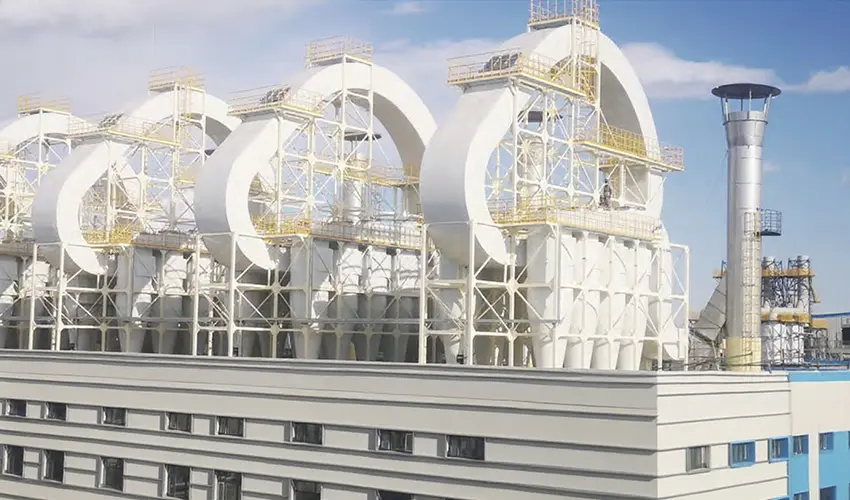
Comprehensive corn starch processing solutions fit within this integrated view, recognizing that feed ingredients come from upstream processing operations with their own quality requirements and optimization opportunities. Holistic thinking about feed manufacturing considers raw material sourcing, processing efficiency, and end-product performance as connected concerns.
Sustainable feed production leverages intelligent production systems that enhance efficiency while minimizing environmental footprint. Automation reduces waste. Energy recovery captures heat that would otherwise be lost. Process optimization reduces the resources required per ton of finished feed.
The one-stop service model integrates financial support, consulting, design, manufacturing, installation, and upgrading services. This comprehensive approach means clients work with a partner who understands the full scope of their needs rather than a vendor focused only on equipment sales.
Maximizing the lifespan and efficiency of a feed mill requires thinking beyond initial construction. Comprehensive feed mill maintenance programs keep equipment operating at peak performance. Preventive maintenance catches wear before it causes failures. Prompt spare parts supply minimizes downtime when repairs are needed.
Regular feed mill upgrades integrate the latest technologies as they become available. Global feed market trends shift toward higher automation, better traceability, and more precise nutrition. Feed safety regulations evolve as understanding of contamination risks improves. Facilities that upgrade proactively maintain their competitive position.
This approach to operational efficiency safeguards the initial investment while ensuring adaptability to future industry demands. A feed mill built today should remain productive and competitive for decades, but only if it receives ongoing attention and strategic improvement.
Clients can expect comprehensive after-sales support including routine preventive maintenance schedules, technical assistance, and prompt spare parts supply. Regular maintenance visits catch developing issues before they cause production interruptions.
Ongoing technical support addresses operational questions and optimization opportunities. Training programs ensure staff can operate and maintain equipment effectively. Performance optimization services help facilities reach and maintain their design capacity.
The commitment extends beyond commissioning into a lasting partnership for sustained operational excellence. A feed mill represents a major investment, and protecting that investment requires ongoing attention from people who understand the specific equipment and systems involved.
Agricultural and animal husbandry operations benefit from working with a partner who understands the full scope of feed mill development. From initial financial support and expert consulting through civil engineering, manufacturing, installation, and ongoing upgrades, an integrated experience eliminates the coordination challenges that plague fragmented approaches.
Agrifam Co., Ltd. provides this comprehensive capability for feed production facilities across China. Building a safer, healthier, and more efficient future for feed production starts with choosing the right development partner.
Contact Agrifam for a personalized consultation to explore how one-stop service can transform your vision into a high-performing reality. Reach us at 010-8591 2286 or email bjhn@agrifamgroup.com.
Opting for an EPC turnkey provider offers single-point responsibility, which eliminates the finger-pointing that happens when problems arise between multiple contractors. Streamlined project management means decisions happen faster because one organization controls all the relevant information. Reduced risks come from having experienced teams who have done this before and know where problems typically emerge.
Cost predictability improves because scope gaps between contracts disappear. When engineering, procurement, and construction are separate contracts, the spaces between them often hide unexpected costs. Faster project completion results from parallel execution and elimination of handoff delays. The integrated approach ensures seamless coordination from feed mill design to commissioning, delivering a highly efficient and compliant animal feed production facility.
Stringent quality control standards apply throughout all phases. This includes meticulous selection of feed mill equipment suppliers based on track record and manufacturing capability. Rigorous quality checks during manufacturing verify that equipment meets specifications before shipping. Construction quality inspections cover welding, concrete, electrical work, and mechanical installation.
Adherence to international and local regulatory compliance for feed safety and environmental protection gets built into design and verified during commissioning. Documentation supports ongoing compliance requirements. The expertise developed across many projects ensures a robust and reliable feed processing plant that meets all applicable standards.
Highly customizable feed mill EPC turnkey solutions address the specific requirements of different feed types. Livestock feed, poultry feed manufacturing, and aquaculture feed processing each have distinct requirements for grinding, mixing, conditioning, and pelleting. Raw material characteristics vary. Pellet specifications differ. Automation requirements depend on production volumes and quality targets.
Expert engineering and design teams work closely with clients to tailor solutions that meet specific production capacities, raw material requirements, and animal nutrition goals. This customization ensures optimal operational efficiency for the specific application rather than forcing a generic solution onto a unique situation.






bjhn@agrifamgroup.com